Why Indians Buy Gold from Dubai: Culture, Trust and the Wedding Gold Pipeline
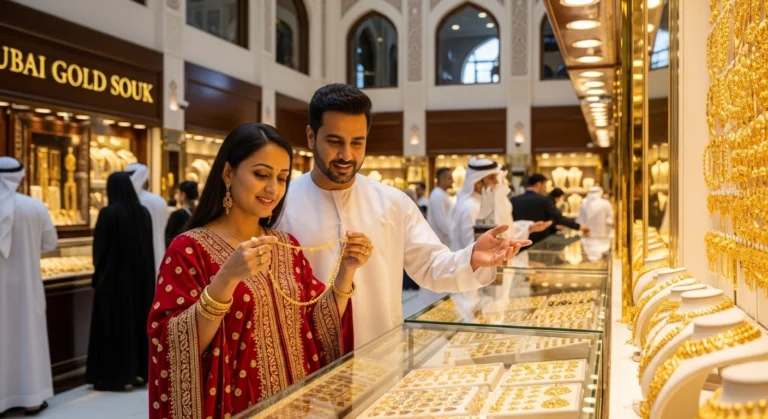
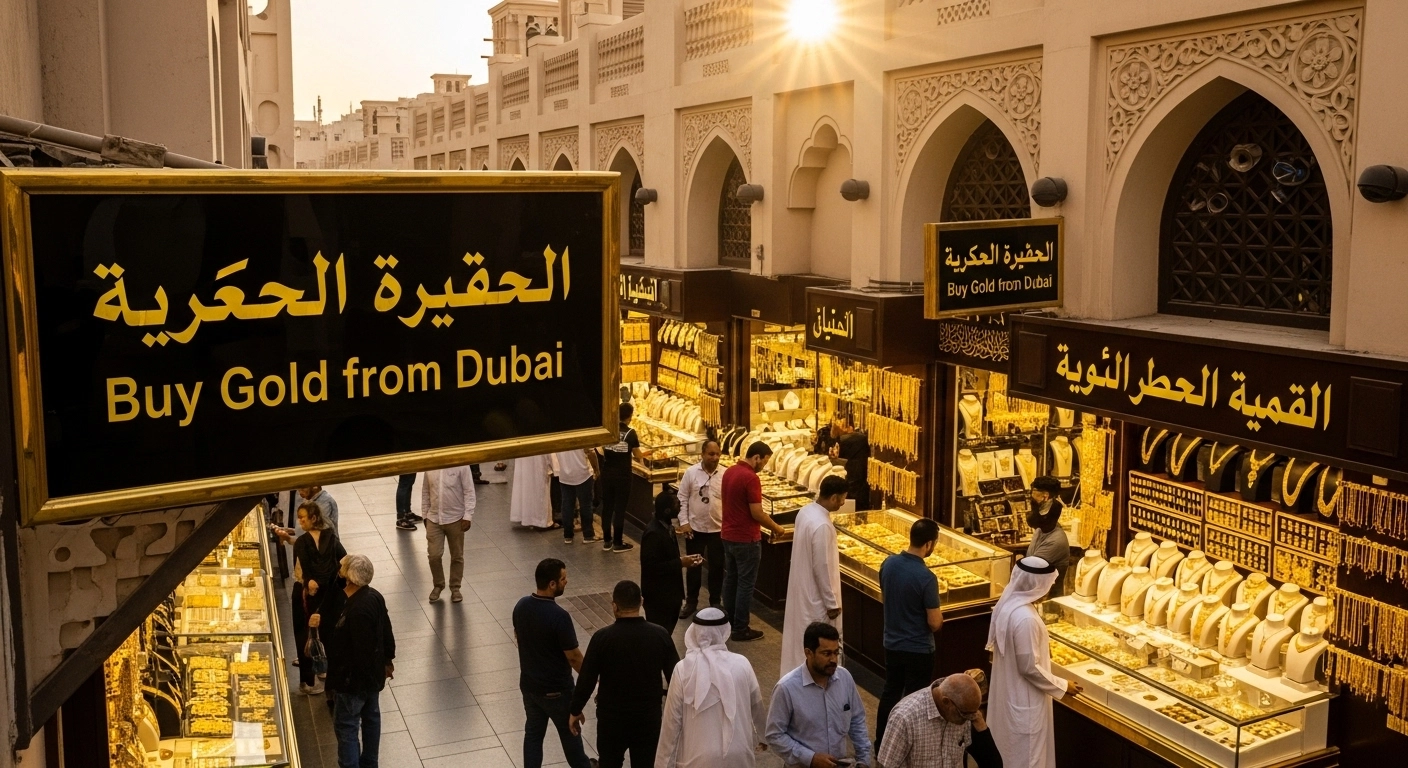
Walk through the Dubai Gold Souk on any weekday afternoon and you’ll hear more Hindi, Tamil, and Malayalam than Arabic. Indian buyers — both tourists and the UAE’s 3.5 million-strong Indian expat community — are the Gold Souk’s single largest customer group. This isn’t a recent trend. It’s a decades-old behaviour pattern rooted in culture, economics, and trust.
The Cultural Driver: Gold as Financial Security
For Indian families across most regions and income levels, gold is not jewellery — it’s a savings instrument, a portable asset, a dowry component, and a financial safety net all in one. India is consistently the world’s second-largest gold consumer (after China), buying 700–900 tonnes annually. For many Indian households, gold accumulated over generations is their most significant asset outside of real estate.
Dubai plugs directly into this cultural reality. Indian expatriates — working in construction, retail, hospitality, finance, and technology — earn in AED and convert a portion of their savings into gold before returning home on annual leave. It’s a generational habit: their parents and grandparents did the same thing, and Dubai has built an entire retail ecosystem around it.
The Trust Factor: UAE Hallmarking
A consistent complaint among Indian gold buyers — especially in smaller cities and with unorganised jewellers — is uncertainty about purity. Is the 22K really 22K? Does the weight include metal alloys that shouldn’t be there? These concerns are real: India’s jewellery sector has historically had purity inconsistencies in parts of the unorganised market.
Dubai eliminates this concern. Every piece sold in a licensed UAE jewellery shop carries a UAE Central Metrology and Quality Authority (ESMA) hallmark confirming purity. 22K means 91.6%, verified independently. For Indian buyers who’ve had bad experiences with purity disputes at home, this assurance is worth a great deal — sometimes as much as the price saving itself.
The Wedding Gold Pipeline
Indian wedding seasons — primarily November to February and April to June — drive the most concentrated gold-buying periods in Dubai. It’s common for Indian families planning weddings back home to coordinate purchases: the UAE-based relatives buy the bridal gold in Dubai, saving 10–15% versus Indian retail prices, and bring it back during their leave visits. For a wedding involving 200–400 grams of gold, this coordination saves ₹1–3 lakhs.
The Gold Souk’s Indian-facing shops know this well. Many display Indian regional jewellery designs — Antique Kerala, Rajasthani Kundan-style pieces, South Indian temple motifs — specifically for this market. Some shops have Hindi and Tamil-speaking staff permanently on duty.
The NRI Investment Angle
Beyond jewellery, Indian NRIs in the UAE buy gold coins and small bars (1g, 5g, 10g, 100g) as a rupee-hedge. When the rupee weakens, gold bought in AED and held in India appreciates in INR terms — giving a double return on both the gold price movement and currency movement. This is a well-understood strategy among UAE-based Indian investors.
Gold ETFs and Sovereign Gold Bonds exist in India as alternatives, but many NRIs prefer physical gold for the same cultural reasons — tangibility, inheritance, and the ability to convert to jewellery when needed.
For the price comparison between Dubai and India right now, see UAE vs India gold price. For customs allowances when bringing gold into India, see how much gold you can carry from Dubai to India. To decide if buying makes sense for your specific situation, read should Indians buy gold in UAE.