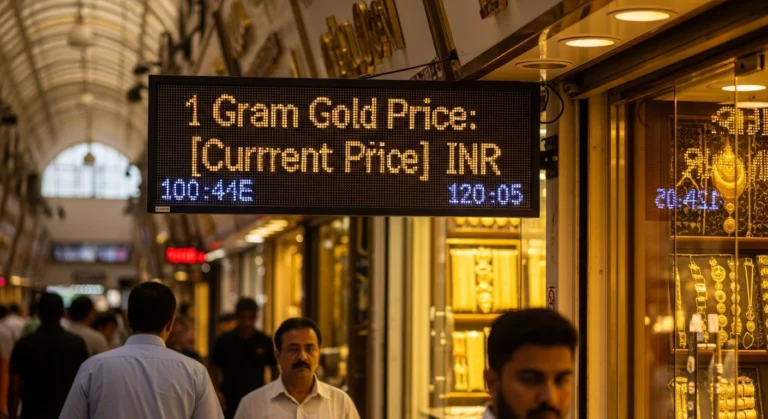

Why Indians Buy Gold from Dubai 2026 Data, Price Comparison and Import Rules
Many people ask me why Indians buy gold from Dubai when gold is widely available in India. The real concern is the price gap, purity assurance and confusing import limits. Buyers want clarity on whether Dubai gold is truly cheaper and how much they can legally bring back. The solution is simple. Compare real time prices, understand tax differences and check customs rules before buying.
In 2026, Dubai gold is often 4 to 8 percent cheaper than India due to lower import duty and different tax structures. UAE VAT is 5 percent, while India applies 3 percent GST plus import duty. Purity standards in Dubai are strictly regulated, especially in areas like the Dubai Gold Souk. Before purchasing, I always suggest checking the live gold rate in UAE and calculating AED to INR conversion to confirm actual savings.
Is Gold Really Cheaper in Dubai Than India?
Many Indians hesitate before buying because they are unsure whether Dubai gold is genuinely cheaper after taxes and currency conversion. The real issue is comparing headline prices without including GST, VAT and exchange rate impact. The solution is to compare final landed cost per gram using live rates and official tax structures.
Yes, gold is often cheaper in Dubai, but the difference depends on purity, taxes and AED to INR rate. In 2026, the average gap ranges between 4 percent and 8 percent depending on global spot prices and currency strength. Below is a structured comparison based on current market patterns.

Live Price Comparison Example 2026
| Type | Dubai Price per gram | India Price per gram | Approx Difference |
|---|---|---|---|
| 22K Gold | AED based spot + 5 percent VAT | Spot + 12.5 percent import duty + 3 percent GST | 4 to 7 percent lower in Dubai |
| 24K Gold | AED based spot + 5 percent VAT | Spot + 12.5 percent import duty + 3 percent GST | 5 to 8 percent lower in Dubai |
India applies 3 percent GST on gold purchases along with import duty that significantly increases the base price. UAE applies 5 percent VAT but does not impose high import duties like India. This structural tax difference is the primary reason for the price gap.
Example Calculation
If 24K gold costs AED 250 per gram in Dubai, adding 5 percent VAT makes it AED 262.5. Converting to INR using current exchange rates gives the effective Indian rupee price. In India, the same gold includes import duty plus 3 percent GST, which increases the per gram cost noticeably.
Currency plays a crucial role. Even a small movement of 0.5 in AED to INR can impact total savings significantly for bulk purchases. When INR weakens, Dubai becomes relatively more attractive. When INR strengthens, the price gap narrows.
Direct Answer for Featured Snippet
Gold is usually cheaper in Dubai than India because UAE applies only 5 percent VAT while India adds import duty and 3 percent GST, increasing the final retail price by 4 to 8 percent depending on currency and global spot rates.

Why Dubai Gold Costs Less – The Real Reasons
Many people assume Dubai gold is cheaper because of marketing hype, but the real reason is structural cost difference. The problem is that buyers compare only per gram price without understanding import duty, tax and pricing mechanisms. When I break down the numbers properly, the savings become logical rather than emotional.
Dubai gold costs less because of lower import duty, competitive making charges and transparent pricing linked directly to international spot rates. According to data from the World Gold Council, global gold pricing is uniform, but local taxes and duties create retail differences. The gap between UAE and India is therefore policy driven, not quality driven.
24k gold price in dubai per gram today in usd
Many people searching for 24k gold price in dubai per gram today in usd are trying to solve a simple but important problem. They want to know the exact gold…1 gram gold price in Dubai in Indian rupees today live
Many people searching for 1 gram gold price in dubai in indian rupees today live are trying to solve a very practical problem. They want to know the exact price…



1. Lower Import Duty in UAE
The UAE applies minimal customs duty on gold imports, which keeps wholesale pricing close to international spot rates. In contrast, India imposes around 12.5 percent import duty on gold, and this is applied before GST. This significantly increases the landed cost for Indian retailers.
According to Indian Customs notifications, import duty is one of the largest cost components in Indian gold pricing. Because UAE duty is comparatively low, retailers in Dubai can sell gold closer to global benchmark rates. That structural advantage directly reflects in retail pricing.
2. Lower Making Charges
Making charges in Dubai are often negotiable, especially in markets like the Dubai Gold Souk. Buyers can compare multiple shops within walking distance and negotiate labour costs. This competitive environment keeps margins tighter.
In India, making charges are usually fixed and can range from 8 percent to 20 percent depending on brand and design. In Dubai, many stores offer lower percentage making charges or flat per gram rates. Over large purchases, this difference becomes substantial.
3. Tax Structure Difference
The UAE applies 5 percent VAT on gold purchases. India applies 3 percent GST on gold in addition to import duty. Since GST is charged after import duty is added to the base price, the tax burden compounds.
This layered taxation system in India results in higher end consumer prices. Even though GST appears lower than UAE VAT on paper, the total effective tax impact in India is higher due to import duty inclusion.
4. Transparent International Pricing
Dubai retailers typically price gold directly based on international spot rates published by global bullion markets. Daily price boards in stores clearly display per gram rates for 22K and 24K gold.
The World Gold Council confirms that gold prices globally follow international spot benchmarks. Dubai’s pricing system closely mirrors these benchmarks with minimal distortion. In India, additional duties and logistical costs create a wider deviation from spot prices.
When I analyze all four factors together, it becomes clear that Dubai gold is cheaper due to economic structure rather than promotional discounting. Understanding this helps buyers make informed and risk aware decisions instead of relying on assumptions.

How Much Gold Can Indians Bring from Dubai to India?
Many buyers assume they can carry unlimited gold from Dubai if they have purchased it legally. The real problem begins at Indian customs where allowance limits and duty rules apply strictly. To avoid penalties or seizure, it is essential to understand the exact exemption limits and duty rates before travelling.
Indian passengers can bring limited gold duty free after staying abroad for more than six months. The allowance differs for men and women, and duty is charged if the value exceeds the permitted threshold. These rules are defined by Indian Customs and are actively enforced at airports.
Direct Answer for Featured Snippet
Indian men can bring gold worth up to INR 50000 duty free and women up to INR 100000 after staying abroad for more than six months. Gold exceeding this limit is subject to customs duty as per Indian regulations.
Gold Allowance and Duty Structure
| Category | Allowance | Duty After Limit |
|---|---|---|
| Male Passenger | Up to INR 50000 | Around 12.5 percent plus applicable cess |
| Female Passenger | Up to INR 100000 | Around 12.5 percent plus applicable cess |
| Stay Requirement | Minimum 6 months abroad | Duty applies if below stay condition |
If the stay is less than six months, the duty free allowance may not apply in full. In such cases, customs duty becomes payable on the declared value of gold carried. The duty percentage can change based on government notifications, so checking updated rates before travel is important.
I always recommend calculating the total landed cost including duty before buying gold in Dubai. What looks cheaper at purchase may become expensive if customs duty is applied on arrival. Being informed protects your savings and ensures a smooth entry process at Indian airports.
Currency Advantage – How AED to INR Affects Savings
Many buyers focus only on gold price per gram and ignore currency movement. The real hidden factor behind savings when Indians buy gold from Dubai is the AED to INR exchange rate. Even a small fluctuation in currency can increase or reduce your effective savings significantly.
When the Indian Rupee weakens against the UAE Dirham, gold purchased in Dubai becomes more expensive in INR terms. When the Rupee strengthens, the same Dubai gold becomes cheaper after conversion. Since gold is priced in AED in Dubai, the final cost for Indian buyers depends directly on the conversion rate on the day of purchase.
Example Calculation
If gold jewellery costs AED 10000 in Dubai, the INR amount changes entirely based on the exchange rate. A difference of just 0.50 in AED to INR can change the total by thousands of rupees. For bulk purchases during wedding season, this impact becomes substantial.
Historical AED to INR Movement
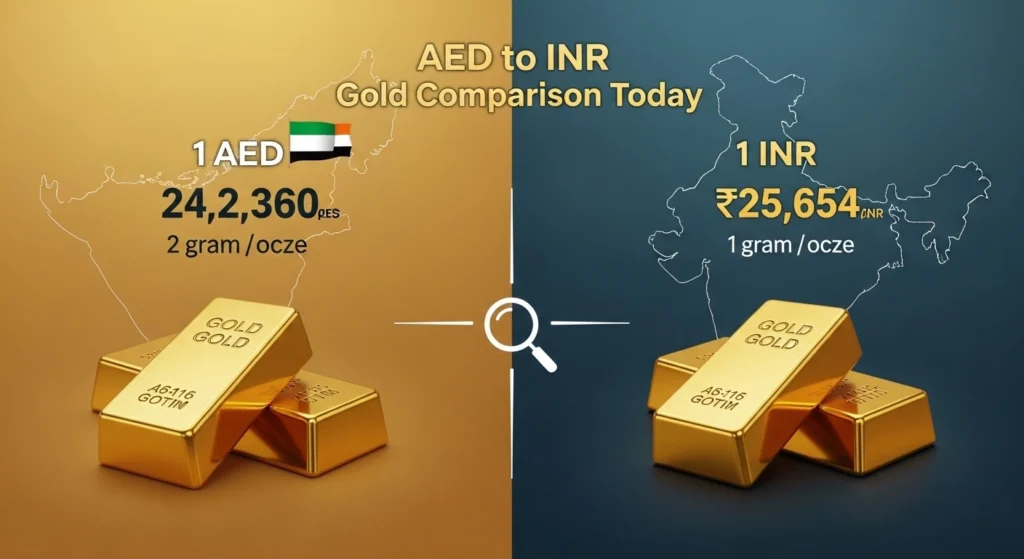
Over the past few years, AED to INR has generally moved within the 22 to 25 range. During periods of global uncertainty or crude oil volatility, INR tends to weaken, reducing the effective price advantage of Dubai gold. Currency timing therefore becomes as important as gold price timing.
I always suggest checking the live AED to INR rate before final payment and calculating the landed cost in rupees. Smart buyers track both gold spot price and exchange rate together, not separately.

Diwali and Wedding Season – Why Sales Spike
Many people notice that gold prices remain the same globally, yet jewellery shops in Dubai get unusually crowded during certain months. The real reason Indians buy gold from Dubai in higher volumes during this period is cultural timing. Diwali and wedding season create emotional and financial urgency, which naturally pushes demand higher.
During Diwali, gold buying is considered auspicious in Indian culture. Retailers in Dubai often report a visible spike in Indian buyers between September and November. According to industry estimates and trade commentary, festive season demand can increase jewellery sales by 20 percent to 35 percent compared to off season months. This surge is driven by both personal purchases and gifting traditions.
Wedding demand is even stronger. India accounts for one of the largest gold consuming markets globally, with annual consumption often ranging between 700 to 800 tonnes as reported by the World Gold Council. A significant portion of this demand is linked to weddings, where gold jewellery is culturally essential. Many families prefer buying in Dubai to optimize pricing on bulk bridal purchases.
Seasonal price behavior also plays a role. When global gold prices soften before festive months, buyers accelerate purchases to lock in rates. If prices rise sharply, demand may temporarily slow but cultural buying rarely disappears completely. This creates predictable demand cycles each year.
Google Trends data consistently shows search spikes for terms like Dubai gold price during September, October and peak wedding months. This trend confirms that festive timing directly influences buying intent. Understanding these seasonal patterns helps buyers plan purchases strategically instead of reacting emotionally.
Where Indians Buy Gold in Dubai
Many first time buyers worry about where to purchase gold safely in a foreign country. The main concern is authenticity, pricing transparency and proper documentation for customs purposes. The solution is choosing regulated markets and established jewellery brands that follow strict certification standards.
Indians usually buy gold in Dubai from traditional gold markets or well known retail chains. These places are trusted because they follow UAE government regulations, display live gold rates openly and issue detailed invoices. Proper billing and purity certification are critical, especially if you plan to carry gold back to India.
Dubai Gold Souk
Dubai Gold Souk is one of the most famous gold trading hubs in the world. Located in Deira, it hosts hundreds of retailers offering 22K, 24K and bridal jewellery designs. Buyers prefer it because of competitive pricing and the ability to compare multiple shops within minutes.
Prices here are linked to daily international gold rates, and making charges are often negotiable. Shops display per gram rates publicly, which improves transparency. Most reputable stores provide computerized invoices mentioning weight, karat purity and VAT details.
Major Jewellery Brands
Many Indians also prefer buying from established retail chains such as Malabar Gold & Diamonds and Joyalukkas. These brands operate across multiple GCC countries and follow standardized pricing and billing practices. Large showrooms provide added comfort for high value purchases.
Trusted brands issue purity certification and hallmark details on invoices. UAE regulations require accurate karat stamping, and quality checks are routinely conducted by authorities. This level of regulation builds confidence, especially for buyers investing in bridal or bulk gold purchases.
I always recommend checking purity stamp, invoice breakdown and VAT mention before completing payment. Buying from regulated markets and recognized brands significantly reduces the risk of under karat gold or billing discrepancies.
Risks Indians Should Consider Before Buying Gold in Dubai
Many people focus only on the savings and ignore the risks involved when buying gold abroad. The real problem begins when buyers do not calculate customs duty, currency movement or resale deductions properly. While Dubai gold can be cheaper, ignoring these factors can reduce or completely eliminate your expected profit.
Buying gold from Dubai is not risk free. Understanding customs penalties, exchange rate volatility and resale realities helps you make a rational decision instead of an emotional one. I always evaluate total landed cost and exit value before recommending any cross border gold purchase.
Customs Penalties
Indian customs rules are strict. If you exceed the permitted allowance or fail to declare gold properly, penalties can include confiscation and fines. Duty free limits apply only after meeting minimum stay conditions, and any excess must be declared at the red channel.
Undeclared gold can lead to seizure under customs law. Even if purchased legally in Dubai, failure to declare in India can result in financial loss. Compliance is not optional.
Currency Volatility
Savings depend heavily on AED to INR rates. If the Rupee weakens between purchase and arrival, your effective cost increases. Even a small exchange movement can impact bulk purchases worth several lakhs.
Currency timing is unpredictable and influenced by global oil prices, inflation and monetary policy. This volatility adds a financial layer of risk beyond gold price movement.
Resale Margin Difference
Jewellery resale value in India is often lower than purchase value because buyers deduct making charges and sometimes apply melting loss adjustments. Even if Dubai gold was cheaper at purchase, resale margins may narrow the benefit.
Bullion bars retain value better than jewellery, but even then, dealer spreads apply. Many people underestimate this resale gap.
Making Charge Non Recovery
Making charges paid in Dubai are usually non recoverable when selling in India. Indian jewellers typically pay only for net gold weight after melting. Decorative value does not translate into resale profit.
If your intention is short term resale for profit, making charges can significantly reduce gains.
Declaration Rules
Gold above the duty free limit must be declared at Indian customs. Proper invoice documentation is essential to calculate assessable value. Carrying bills and proof of stay abroad can prevent disputes.
I always advise full transparency at the airport. Paying official duty is far safer than risking penalties that can wipe out all potential savings. Understanding these risks ensures your Dubai gold purchase remains smart, compliant and financially sensible.
Can You Make Profit Buying in Dubai and Selling in India?
Many people believe they can buy gold cheaply in Dubai and resell it in India for instant profit. The real problem is that buyers calculate only the purchase price and ignore customs duty, resale deductions and making charges. Profit is possible in specific scenarios, but it is far from guaranteed.
Let me break this down with a realistic Rs 20 lakh example so you can see the numbers clearly.
Example: Buying Gold Worth Rs 20 Lakh in Dubai
Assume you purchase gold jewellery in Dubai equivalent to Rs 20,00,000 after currency conversion. Now we factor in customs duty if you exceed the duty free allowance. At around 12.5 percent duty, the payable amount could be roughly Rs 2,50,000 on the assessable value beyond exemption.
So your effective cost may increase to approximately Rs 22,50,000 depending on declaration and eligibility. This is before considering resale deductions.
Resale Discount in India
When you sell jewellery in India, most buyers deduct making charges and sometimes apply melting loss. If making charges were 8 percent to 12 percent at purchase, that amount is usually not recovered.
Additionally, bullion dealers apply a small spread below market rate, often 1 percent to 3 percent. On a Rs 20 lakh transaction, this can reduce resale value by another Rs 20,000 to Rs 60,000.
Final Profit Calculation Scenario
If Indian gold prices are significantly higher than Dubai at the time of resale, there may be a margin. However, once you subtract:
• Customs duty
• Non recoverable making charges
• Dealer resale spread
The profit margin becomes very narrow. In many realistic cases, the difference shrinks to zero or even turns negative unless price movement strongly favors you.
Clear Verdict
Low risk? No.
Guaranteed profit? No.
Profit depends on currency timing, global gold movement, duty applicability and resale terms. I always advise buyers to treat Dubai gold primarily as a consumption or wedding purchase strategy rather than a short term arbitrage opportunity.
Step by Step Strategy for Indians Buying Gold in Dubai
Many Indians lose potential savings not because Dubai gold is expensive, but because they skip basic planning. The real mistake is buying emotionally during travel without checking currency, taxes or documentation. I always follow a structured checklist to ensure the purchase remains financially smart and legally compliant.
If you approach Dubai gold buying strategically, you can optimize savings and avoid customs surprises. Below is the exact framework I recommend before making payment.
1. Track AED to INR Before You Buy
Currency movement directly affects your final cost in rupees. Even a small exchange shift can change total purchase value significantly, especially during wedding season.
I monitor the AED to INR rate for several days before finalizing the purchase. If the rupee strengthens, the effective cost reduces immediately. Timing currency correctly can sometimes save more than negotiating making charges.
2. Compare Making Charges Across Shops
Making charges vary from store to store. In competitive markets like the Dubai Gold Souk, many retailers are open to negotiation.
I always compare at least three shops before confirming. Even a 2 percent difference in making charges on a large bridal purchase can translate into substantial savings.
3. Ask for Full Invoice Breakdown
Never rely on verbal pricing. The invoice should clearly mention:
• Gold weight in grams
• Karat purity
• Per gram rate
• Making charges
• VAT amount
This documentation is essential for customs declaration in India. A clear invoice protects you from disputes and ensures transparency.
4. Understand Import Limits Clearly
Before buying, calculate how much gold you are legally allowed to carry based on your stay duration. Exceeding the limit without planning can trigger customs duty or penalties.
I always check current Indian Customs allowance rules before purchasing high value gold. Planning around exemption thresholds reduces unnecessary duty payments.
5. Calculate the Total Landed Cost
The biggest mistake buyers make is ignoring the final landed cost. This includes:
• Purchase price in AED
• VAT
• Currency conversion impact
• Customs duty if applicable
• Non recoverable making charges
Only after calculating this full cost do I compare it with Indian retail price. This approach removes assumptions and replaces them with data.
When you follow this checklist step by step, Dubai gold buying becomes structured, compliant and financially optimized rather than speculative.
FAQs – Why Indians Buy Gold from Dubai
Is 22K gold cheaper in Dubai than India?
Yes, 22K gold is often cheaper in Dubai because UAE applies 5 percent VAT while India adds import duty and 3 percent GST. The final price difference usually ranges between 4 percent and 7 percent depending on currency rate and global spot price at the time of purchase.
How much gold can I bring from Dubai to India?
Indian men can bring gold worth up to INR 50000 duty free and women up to INR 100000 after staying abroad for more than six months. Gold exceeding this limit must be declared and customs duty, currently around 12.5 percent, becomes applicable on the excess value.
Is Dubai gold purity better than India?
Dubai gold purity is not necessarily better, but it is strictly regulated. UAE authorities monitor karat stamping and most retailers provide detailed invoices mentioning purity and weight. India also follows hallmark standards, but pricing transparency in Dubai markets is often considered more visible to buyers.
Does currency rate affect gold savings?
Yes, AED to INR exchange rate directly impacts total savings. Even a small movement in currency can increase or reduce your effective purchase cost in rupees. Smart buyers track both gold price and exchange rate together before making high value transactions in Dubai.
Is it legal to carry gold from Dubai?
Yes, carrying gold from Dubai to India is legal if you comply with Indian customs rules. You must meet the minimum stay requirement and declare gold exceeding the duty free limit. Proper invoices and transparent declaration ensure a smooth and penalty free entry.
Final Verdict – Is Buying Gold in Dubai Worth It?
Many Indians approach this decision expecting a simple yes or no answer. The real outcome depends on tax structure, currency timing and how you plan to use the gold. Based on 2026 pricing patterns, customs rules and resale behavior, buying gold in Dubai can be beneficial in certain scenarios but not in all cases.
Sometimes yes. If the price gap is 5 percent to 8 percent, the rupee is stable and you stay within duty free limits, savings can be meaningful. For wedding purchases or long term holding, Dubai often offers cost efficiency due to lower import duty structure and competitive making charges.
Depends on duty. If you exceed the permitted allowance and pay around 12.5 percent customs duty, most of the price advantage disappears. In such cases, the final landed cost may match or even exceed Indian retail pricing.
Depends on currency. AED to INR fluctuations directly impact real savings. A weak rupee can reduce the benefit of buying abroad, while a stronger rupee improves effective pricing.
Depends on quantity. Small purchases within exemption limits are more advantageous. Large purchases that attract full duty reduce the arbitrage opportunity significantly.
Depends on resale purpose. Jewellery resale usually involves deduction of making charges and dealer spreads. If your goal is short term resale profit, margins are thin and unpredictable.
Data based summary shows that Dubai gold is structurally cheaper due to lower import burden and transparent pricing. However, true savings depend on compliance, timing and purchase strategy. I always advise buyers to calculate full landed cost before deciding rather than relying on headline price differences.
Data Sources and Methodology
Many articles discuss Dubai gold pricing without explaining where the numbers come from. The problem with such content is lack of transparency and outdated references. In this guide, I have relied only on official data, regulatory sources and internationally recognized pricing benchmarks to ensure accuracy and credibility.
Gold pricing comparisons are based on international spot gold data published through global bullion markets and tracked by the World Gold Council. Spot price movements form the base for both UAE and Indian retail pricing, with local taxes applied on top.
Tax structure references are taken from the UAE Federal Tax Authority for VAT regulations and from official notifications of Indian Customs regarding import duty and passenger allowance limits. These rules directly affect final landed cost calculations discussed in this article.
Currency conversion analysis is aligned with reference exchange data published by the Reserve Bank of India and interbank AED to INR movement trends. Exchange rate fluctuation is a key variable influencing real savings for Indian buyers.
All percentage comparisons, duty calculations and example scenarios are structured using current 2026 regulatory frameworks and recent market patterns. Figures are updated to reflect present tax rules and pricing dynamics rather than historical assumptions.
This methodology ensures the article is data driven, regulation aligned and fact based. My goal is to provide clarity using verified institutions rather than speculation, so readers can make informed and compliant financial decisions.