
Should Indians Buy Gold in UAE? 2026 Guide Price Purity Duty and Savings Calculator
Should Indians buy gold in UAE in 2026 is a serious financial decision, not just a shopping choice. Many Indians assume Dubai gold is always cheaper, but they often ignore customs duty, exchange rate impact, and making charges. That is where most buyers lose money. I solve this problem by calculating the total landed cost instead of just comparing per gram prices. When I check the live UAE gold rate and convert it using the AED to INR gold rate, I get a much clearer and more realistic picture.
In this guide, I will break down exactly who benefits, when savings are real, and when buying in India makes more sense. Based on recent 2026 comparisons and historical pricing trends available in our gold price history chart, the price gap between UAE and India can range between 2 percent and 8 percent before duties. However, final savings depend heavily on exchange rate timing, customs rules, and purchase quantity.
If you are buying for a wedding, investment, or long term holding, I will help you make a data backed decision using proper calculation methods, not assumptions.
Quick Answer
Should Indians buy gold in UAE in 2026? Yes, but only if your total savings are higher than customs duty, travel costs, and currency conversion charges. It works best for jewellery purchases where making charges are low or promotional discounts apply. It is usually not worth it for small quantities after accounting for duty and exchange rate impact.
Why UAE Gold Feels Cheaper What You Are Actually Comparing
Many Indians feel that gold is cheaper in Dubai because they compare only the displayed per gram rate. What they are actually seeing is the global spot price converted from US dollars per ounce into dirhams per gram, then displayed as a retail board rate. The base of this calculation is the international XAU USD price, which changes throughout the day, and then gets converted into AED using the live dollar rate. You can verify the real time numbers anytime using the gold rate in UAE and then convert them accurately with the AED to INR gold rate.
The second component is the retail premium. UAE markets are highly competitive, especially in Dubai Gold Souk and major malls, so retailers often work with thinner margins compared to many Indian cities. This competitive environment can create a 2 to 5 percent visible gap before taxes and duties are applied.
Making charges are another critical factor. In the UAE, making charges are often negotiable and can range between 5 percent and 15 percent depending on design and season. In India, making charges plus wastage can push the effective cost higher, especially for heavy bridal jewellery.
Tax structure also matters. UAE applies 5 percent VAT on jewellery, while India applies 3 percent GST on gold value plus making charges. On the surface, India seems lower on tax, but the overall retail structure and promotional discounts often balance the difference.
Finally, the AED to INR exchange rate can make or break your savings. Even a one rupee movement in exchange rate can significantly change your landed cost on larger purchases. This is why I always recommend calculating the full cost instead of relying on headline price differences.
Spot Price vs Retail Price Do Not Mix These
Spot price is the international wholesale rate of pure gold traded in financial markets. It reflects the raw value of gold before retail margins, taxes, and fabrication costs. Retail jewellery price, on the other hand, includes conversion into local currency, retailer premium, making charges, and taxes.
Many headlines compare Dubai spot price with Indian jewellery retail price, which creates a misleading impression of huge savings. To make a fair comparison, you must compare retail to retail, not spot to showroom price.
UAE vs India Gold Price Comparison With Tables
To answer whether Indians truly save money, I compare retail to retail using live UAE showroom rates and Indian market prices on the same date. I take the UAE per gram rate from the gold rate in UAE page, convert it using the live exchange on the AED to INR gold rate, and then compare it with Indian city averages. This method removes guesswork and shows the real percentage gap.
Below is a sample comparison framework based on recent 2026 market levels. Numbers are illustrative but structured exactly how I calculate them before making any buying decision.
Table 1 — Per Gram Price Dubai vs India 24K 22K 18K
| Date and Time | UAE AED per g | UAE INR per g Converted | India INR per g | Difference % | Notes |
|---|---|---|---|---|---|
| Feb 2026 11:00 | 240 AED | 5,400 INR | 5,650 INR | 4.4% lower | Before duty |
| Feb 2026 11:00 22K | 225 AED | 5,062 INR | 5,280 INR | 4.1% lower | Retail comparison |
| Feb 2026 11:00 18K | 185 AED | 4,162 INR | 4,350 INR | 4.3% lower | Jewellery grade |
In most 2026 comparisons, UAE retail appears 3 to 6 percent cheaper before customs duty and travel costs are considered.
Table 2 — Jewellery Total Cost Comparison Real Checkout Price
Example purchase: 50 grams 22K bridal jewellery
| Component | UAE Purchase | India Purchase |
|---|---|---|
| Weight | 50 g | 50 g |
| Purity | 22K | 22K |
| Base Gold Value | 253,100 INR | 264,000 INR |
| Making Charge | 8% negotiable | 12% typical |
| VAT or GST | 5% VAT | 3% GST |
| Festival Discount | 5% on making | Minimal |
| Final Payable | 288,000 INR approx | 305,000 INR approx |
| Estimated Savings Before Duty | 17,000 INR | — |
If customs duty applies on return to India, part of this saving may reduce depending on declaration and eligibility.
The Real Savings Formula Total Landed Cost for Indians
When I decide whether buying gold in the UAE is worth it, I do one simple thing. I calculate the total landed cost in India and compare it with Indian retail on the same day. This avoids the biggest mistake people make, which is stopping at the UAE per gram rate and assuming the savings are guaranteed. If you want to do this quickly, I use the gold price calculator Dubai along with the live AED to INR gold rate so my conversion stays accurate.
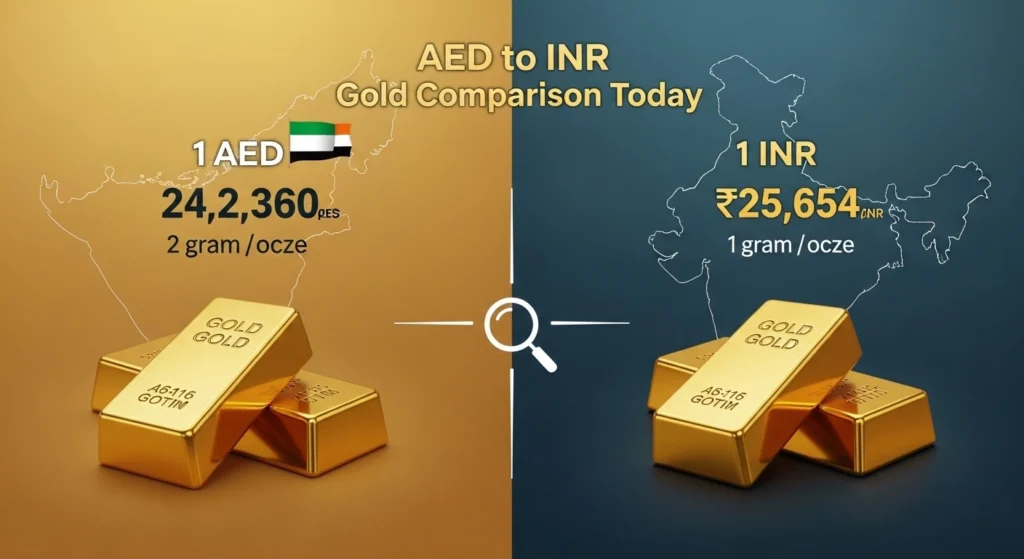
24k gold price in dubai per gram today in usd
Many people searching for 24k gold price in dubai per gram today in usd are trying to solve a simple but important problem. They want to know the exact gold…1 gram gold price in Dubai in Indian rupees today live
Many people searching for 1 gram gold price in dubai in indian rupees today live are trying to solve a very practical problem. They want to know the exact price…


Landed Cost Checklist
Here is the exact checklist I follow before buying.
• Start with the purchase price in AED from the invoice
• Convert AED to INR using today’s rate from AED to INR gold rate
• Add bank or forex markup, usually 1 percent to 3 percent depending on your card or exchange method
• Add customs duty if your quantity and eligibility require it
• Add any extra charges, such as GST related processing or documentation costs if applicable
• Compare the final landed cost with Indian retail rates for the same purity and weight
A simple mini formula looks like this.
Total Landed Cost in INR equals UAE Invoice AED multiplied by AED to INR rate plus bank markup plus duty plus other charges.
Table 3 — Savings Break Even Scenarios Small vs Medium vs Large Buy
The table below shows why quantity matters. I am using a realistic structure based on 2026 buying patterns, but your exact result will vary by exchange rate, making charges, and duty status.
| Scenario | UAE Cost in INR | Bank and Forex Charges | Estimated Duty | Total Landed Cost INR | India Cost INR | Net Gain or Loss |
|---|---|---|---|---|---|---|
| 10g 22K | 52,000 | 1,000 to 1,500 | 6,000 to 10,000 | 59,000 to 63,500 | 58,500 | Loss to break even |
| 50g 22K | 260,000 | 4,000 to 7,000 | 30,000 to 50,000 | 294,000 to 317,000 | 305,000 | Break even to small gain |
| 100g 22K | 520,000 | 8,000 to 14,000 | 60,000 to 100,000 | 588,000 to 634,000 | 610,000 | Small gain possible |
This is why I rarely recommend UAE gold for very small quantities unless you are already traveling and buying during strong promotions. If you are aiming for a major purchase, it becomes much more important to time your exchange rate and negotiate making charges, which I cover in more detail in how much cheaper is Dubai gold for Indians.
Indian Customs Rules When Bringing Gold from UAE
This is the most important section if you are serious about whether Indians should buy gold in UAE. Many buyers calculate savings correctly but ignore customs rules, which can completely change the final cost. Indian customs regulations are very specific about quantity, eligibility, and declaration. I always advise checking the latest official circular before travel because rules and duty percentages can change.
If you miscalculate eligibility or fail to declare properly, even a profitable purchase can turn into a financial loss. So let me break this down clearly and practically.
How Much Gold Can You Bring to India
Indian customs allows duty free gold within specific limits only for eligible passengers who meet minimum stay requirements. The typical structure works as follows, but must always be verified before travel.
| Passenger Type | Allowed Quantity Duty Free | Minimum Stay Abroad | Documents Needed |
|---|---|---|---|
| Male passenger | Up to 20 grams value capped as per customs rules | Generally 6 months | Passport, invoice, boarding pass |
| Female passenger | Up to 40 grams value capped as per customs rules | Generally 6 months | Passport, invoice, boarding pass |
| NRI returning | Subject to specific eligibility | Usually 6 months | Passport, stay proof, purchase invoice |
The duty free value cap applies even if weight is within limit. If your stay abroad is shorter than the minimum requirement, the concession may not apply.
Import Duty and How It Is Calculated
If you exceed the allowed duty free quantity or do not qualify for exemption, customs duty becomes payable. Duty is calculated based on the assessable value determined by customs, not necessarily the price you paid. This value is usually linked to international gold rates converted into INR on the date of arrival.
The total payable may include basic customs duty plus additional cess or surcharge depending on prevailing policy. Even a few percentage points difference in duty can erase the apparent UAE price advantage. One common mistake I see is buyers calculating duty on invoice value only, without understanding that customs valuation may differ.
Another mistake is assuming jewellery and gold bars are treated identically. In practice, classification and declaration matter.
What Happens If You Do Not Declare
If you carry gold beyond permitted limits and fail to declare it, customs authorities can seize the gold immediately. Penalties can include monetary fines and confiscation under the Customs Act. In serious cases, prosecution can also follow.
Even if gold is eventually released, the process can be lengthy and stressful. From my perspective, any savings that depend on non declaration are not real savings. Full transparency at the red channel is always the safest approach.
Before purchasing gold in the UAE, always cross check current customs notifications and official guidance. Policies can change, and relying on outdated information can be costly.
Purity, Hallmarking and How to Verify Authenticity in UAE
When Indians buy gold in the UAE, purity is just as important as price. A small difference in karat value can change resale value significantly once you return to India. I always tell buyers that savings only matter if the gold is authentic, properly hallmarked, and fully documented. Trust begins with verification, not discounts.
The UAE has a strong reputation for gold quality control, but you still need to check carefully at the counter. A professional store will always provide clear stamping, invoice breakdown, and transparent weight measurement. If any of these are missing, I personally walk away.
UAE Hallmark System Dubai Central Laboratory and UAE Standards
Gold sold in the UAE is tested and stamped under official quality control standards. In Dubai, the Dubai Central Laboratory verifies purity levels before items reach major retail stores. You should look for karat stamps such as 24K, 22K, or 18K along with fineness markings like 999 or 916.
Your invoice should clearly show purity, weight in grams, making charges, VAT amount, and total payable. A vague invoice without breakdown details is a red flag. Serious retailers always provide itemized billing because transparency builds long term trust.
How to Check Purity in 2 Minutes Buyer Checklist
Here is the simple checklist I personally follow at the store.
• Look for official hallmark stamp and fineness number
• Ask for a karat confirmation or certificate
• Check weight on the store scale in front of you
• Ensure invoice shows gold value and making charges separately
• Confirm return, exchange, and buyback policy in writing
These five steps take less than two minutes and protect you from most common issues.
22K vs 24K vs 18K What Indians Usually Buy and Why
Most Indians traditionally prefer 22K gold because it balances purity and durability. 24K gold is 99.9 percent pure and ideal for coins or investment bars, but it is too soft for daily wear jewellery. 18K gold contains a higher alloy mix, which makes it stronger and more suitable for modern designs.
For weddings and traditional jewellery, 22K remains the most common choice among Indian buyers. For investment purposes, many prefer 24K coins because resale calculations are simpler and purity is higher. Choosing the right karat depends on whether your priority is cultural value, durability, or long term investment potential.
Making Charges in UAE vs India Biggest Hidden Variable
When people ask me whether Indians should buy gold in UAE, I always say one thing first. Do not look at the per gram gold rate alone. Making charges can completely wipe out the price advantage. Even if UAE gold appears 4 to 6 percent cheaper at the base rate, a higher making charge can erase that difference instantly.
In many Indian cities, especially for bridal jewellery, making charges plus wastage can range between 10 percent and 25 percent depending on design complexity. In the UAE, competition is strong, and during seasonal events like Dubai Shopping Festival gold deals or Eid gold offers in Dubai, retailers often reduce making charges significantly. That is where real savings are created, not just from the gold rate itself.
Typical Making Charge Models Flat per Gram vs Percentage of Value
There are two common making charge models used in both UAE and India.
The first model is a flat rate per gram. For example, a retailer may charge 30 to 50 AED per gram for standard designs. This model is easier to calculate and often more transparent for simple jewellery like chains and bangles.
The second model is a percentage of gold value. For instance, 8 percent to 15 percent of the gold value is added as making charge. On heavier pieces, this can significantly increase your final bill. A 12 percent making charge on a 300,000 INR bridal set adds 36,000 INR before tax.
In my experience, flat rate structures usually offer better clarity, while percentage based models require negotiation.
Where You Save the Most
Savings potential depends heavily on the type of item you buy.
| Item Type | Making Charge Sensitivity | Best Place to Buy | Why |
|---|---|---|---|
| Simple Bangles | Medium | UAE | Competitive pricing and negotiable making |
| Plain Chains | Low to Medium | UAE | Flat making often cheaper |
| Bridal Sets | Very High | Depends | Design complexity drives cost |
| Gold Coins 24K | Very Low | UAE or India | Minimal making charge |
| Gold Biscuits Bars | Very Low | UAE | Close to spot with small premium |
Coins and biscuits usually have very low fabrication costs, often 1 percent to 3 percent above spot. Jewellery with intricate work has the highest sensitivity to making charges.
If your goal is investment, coins or bars generally make more financial sense. If your goal is wedding jewellery, negotiation and timing matter more than the headline gold rate.
Understanding this hidden variable often answers the main question better than any price chart.
Best Places for Indians to Buy Gold in UAE
When Indians plan to buy gold in the UAE, the next big question is where to buy it. The location can influence pricing transparency, negotiation flexibility, and overall buying experience. I always tell buyers to focus on trust and invoice clarity rather than only promotional banners. The UAE market is competitive, but not all buying environments offer the same advantages.
Broadly, buyers choose between Dubai Gold Souk, shopping mall jewellery stores, or online platforms. Each has its own strengths and limitations.
Dubai Gold Souk vs Malls vs Online Stores
Here is a clear comparison to help you decide.
| Location Type | Trust Level | Pricing Transparency | Making Charge Negotiation | Returns Policy | Crowds |
|---|---|---|---|---|---|
| Dubai Gold Souk | High if established shops | Visible board rates | Strong negotiation possible | Depends on store | Very high during peak season |
| Mall Jewellery Stores | Very high brand trust | Clear billing and breakdown | Limited negotiation | Structured return policy | Moderate |
| Online Jewellery Platforms | Growing trust | Fixed pricing | Rarely negotiable | Policy varies | No physical crowd |
Dubai Gold Souk often provides better room for negotiation, especially for simple jewellery and bulk purchases. Mall stores offer comfort, structured policies, and standardized invoices. Online platforms may offer convenience but require extra caution regarding authenticity and return terms.
Timing Matters Festivals DSF Eid Diwali Season Offers
Timing can significantly improve your deal. During events like Dubai Shopping Festival and Eid promotions, many retailers reduce making charges or offer gifts instead of price cuts. Some stores advertise zero making charge on selected designs, while others provide cashback or gold coin giveaways.
Indian festive seasons such as Diwali also trigger targeted offers for Indian buyers. I personally recommend tracking seasonal trends and reviewing insights from Dubai Shopping Festival gold deals and Eid gold offers in Dubai before planning a purchase.
In competitive periods, discounts on making charges between 5 percent and 10 percent are common. For larger purchases, that difference can translate into meaningful savings.
Choosing the right place at the right time often matters more than chasing a one day price fluctuation.
Coins or Bars vs Jewellery What Is Better for Indians
When Indians buy gold in the UAE, the right choice depends on intent. If your goal is pure investment, coins and bars usually make more financial sense. If your goal is weddings, gifting, or cultural use, jewellery becomes the practical option. I always separate emotional buying from investment buying because the math is different.
The price structure, resale value, and deductions vary significantly between these two categories. Understanding this difference can protect long term value.
Investment Buyers Coins and Bars Pros Cons and Resale in India
Coins and bars are usually 24K with 99.9 percent purity. Making charges are minimal, often between 1 percent and 3 percent over the spot price. This means most of what you pay goes directly into gold value rather than design cost.
From a resale perspective, 24K coins are easier to liquidate in India. Jewellers generally deduct less when purity is clear and weight is standard. However, resale value depends heavily on documentation. Always keep the original UAE invoice, purity stamp details, and sealed packaging if applicable.
One limitation is customs declaration. Larger quantities of coins can attract scrutiny at Indian customs, and duty must be calculated properly. If you plan to resell in India, confirm that the purity marking aligns with Indian hallmarked standards to avoid extra melting deductions.
Jewellery Buyers Design Value Retention and Buyback Policies
Jewellery appeals to cultural preferences, especially for weddings and gifting. Many Indian buyers prefer 22K pieces because they balance durability and high gold content. However, jewellery includes making charges, and these are rarely recovered at full value during resale.
Most jewellers in India deduct making charges and sometimes apply a 5 percent to 15 percent deduction on exchange. Some branded retailers offer buyback at prevailing gold rate minus small processing charges, but policies vary widely.
Before purchasing jewellery in the UAE, I always check the store’s buyback and exchange policy in writing. If the store offers international buyback or transparent exchange terms, that adds security. Otherwise, resale in India may involve melting and purity testing, which can reduce your effective return.
If your priority is long term wealth preservation, coins and bars generally offer cleaner value retention. If your priority is cultural or personal use, jewellery remains meaningful but financially less efficient.
Exchange Rate Effect AED to INR When UAE Gold Becomes a Deal
The exchange rate is one of the most underestimated factors when Indians buy gold in the UAE. Even if UAE gold is 4 percent cheaper at the retail level, a weak INR can erase the advantage instantly. I always calculate savings only after converting AED into INR using the live AED to INR gold rate, because currency movement can change the outcome more than making charges.
For example, if you purchase gold worth 10,000 AED, the final INR cost depends entirely on the AED to INR rate on that day. A one rupee difference per dirham means a 10,000 INR difference on that purchase. On larger transactions like 50 grams or 100 grams, the impact becomes even more significant.
To simplify, the basic conversion works like this:TotalCostinINR=PurchaseinAED×AEDtoINRRate
When the rupee strengthens, UAE gold becomes more attractive. When the rupee weakens, savings shrink quickly.
Table 4 — Savings at Different AED INR Rates Sensitivity Table
Example purchase value: 10,000 AED
Assume India equivalent retail value: 575,000 INR for comparable weight
| AED to INR Rate | UAE Cost in INR | Estimated Bank Markup | Total Effective Cost | India Cost | Net Gain or Loss |
|---|---|---|---|---|---|
| 53 | 530,000 | 5,000 | 535,000 | 575,000 | 40,000 gain |
| 54 | 540,000 | 5,000 | 545,000 | 575,000 | 30,000 gain |
| 55 | 550,000 | 5,000 | 555,000 | 575,000 | 20,000 gain |
| 56 | 560,000 | 5,000 | 565,000 | 575,000 | 10,000 gain |
| 57 | 570,000 | 5,000 | 575,000 | 575,000 | Break even |
This table shows how just a 4 rupee change in exchange rate can shift savings from 40,000 INR to zero. That is why timing matters almost as much as price difference.
If you want to check historical exchange driven impact, reviewing the gold price history chart helps understand broader price cycles along with currency trends.
How to Get Better FX Rates Practical Tips
I never rely blindly on my bank’s default card rate. Banks usually add a 1 percent to 3 percent markup on international transactions. For larger purchases, this adds up quickly.
Cash exchange in UAE exchange houses can sometimes provide better rates, especially if negotiated for higher amounts. However, you must compare rates carefully and consider safety.
Forex cards can offer competitive rates with preloaded AED balances, reducing uncertainty from rate fluctuations. The key is to compare total effective rate including hidden fees before choosing any method.
In my experience, controlling exchange rate cost is one of the smartest ways to protect your gold savings.
Common Mistakes Indians Make Buying Gold in UAE
When I analyze whether Indians should buy gold in UAE, I notice the same mistakes repeated again and again. Most losses do not happen because gold is expensive. They happen because buyers skip calculation, ignore rules, or trust assumptions instead of data. Avoiding these mistakes alone can protect thousands of rupees on a single purchase.
Below is a practical checklist in AEO friendly format so you can quickly verify your decision before paying.
Mistake List
• Comparing international spot price with Indian jewellery retail price instead of comparing retail to retail
• Ignoring Indian customs duty and calculating savings only on UAE invoice value
• Not checking a detailed invoice breakdown showing gold value, making charges, and VAT separately
• Overpaying making charges without negotiating, especially during non promotional periods
• Not checking the live AED to INR gold rate before converting the purchase cost
• Assuming small quantities automatically mean duty free without verifying eligibility conditions
• Not asking about return, exchange, and buyback policy in writing
• Buying jewellery without verifying hallmark and purity stamp
• Paying with a bank card without understanding foreign transaction markup fees
• Failing to declare gold at Indian customs when required, risking penalties or seizure
• Buying complex bridal designs without comparing making charges with Indian jewellers
• Ignoring historical trend analysis available in the gold price history chart before timing the purchase
If you avoid these common mistakes, your decision becomes structured and data based instead of emotional. Buying gold in the UAE can be beneficial, but only when every cost component is calculated properly and compliance rules are followed.
Safety and Scam Prevention Gold Souk and Online
When Indians buy gold in the UAE, safety should never be an afterthought. The market is highly regulated and reputable, but buyers still need to stay alert. I always prioritize transparency, documentation, and proper billing over flashy discounts. A small oversight in verification can lead to long term regret.
Whether you are buying from Dubai Gold Souk, a mall retailer, or an online platform, the basic protection rules remain the same. Trust is built on paperwork, purity verification, and clear policies.
Red Flags Checklist
• Prices that look significantly lower than the live gold rate in UAE without explanation
• No detailed invoice showing gold value, making charge, and VAT separately
• Missing hallmark or unclear karat stamp on jewellery
• Sales staff refusing to weigh the item in front of you
• Pressure tactics such as limited time only offers without documentation
• No written return, exchange, or buyback policy
• Online stores without physical address or customer support verification
• Refusal to provide purity confirmation or certification
If even one of these red flags appears, I pause the transaction. In gold buying, caution is always better than speed.
Who Should Buy Gold in UAE Decision Matrix
Not everyone benefits equally from buying gold in the UAE. The right decision depends on travel status, purchase quantity, and purpose. I always recommend matching your situation with realistic savings potential instead of following general assumptions.
Below is a practical decision matrix to simplify this.
Table 5 — Decision Matrix
| Buyer Type | Recommended | Reasoning |
|---|---|---|
| NRI visiting India after long stay | Yes | Eligible for concessions and larger purchase planning |
| Tourist on short trip | Maybe | Savings depend heavily on duty and exchange rate |
| Wedding shopping buyer | Maybe to Yes | Can save on making during promotions but must compare total cost |
| Investment buyer coins or bars | Yes | Lower making charge and better resale clarity |
| Small quantity buyer under 20g | Usually No | Savings often disappear after duty and currency conversion |
If you are an NRI planning a structured purchase and timing exchange rate wisely, UAE buying can make financial sense. If you are a short term tourist buying a small amount, the math often does not justify the effort.
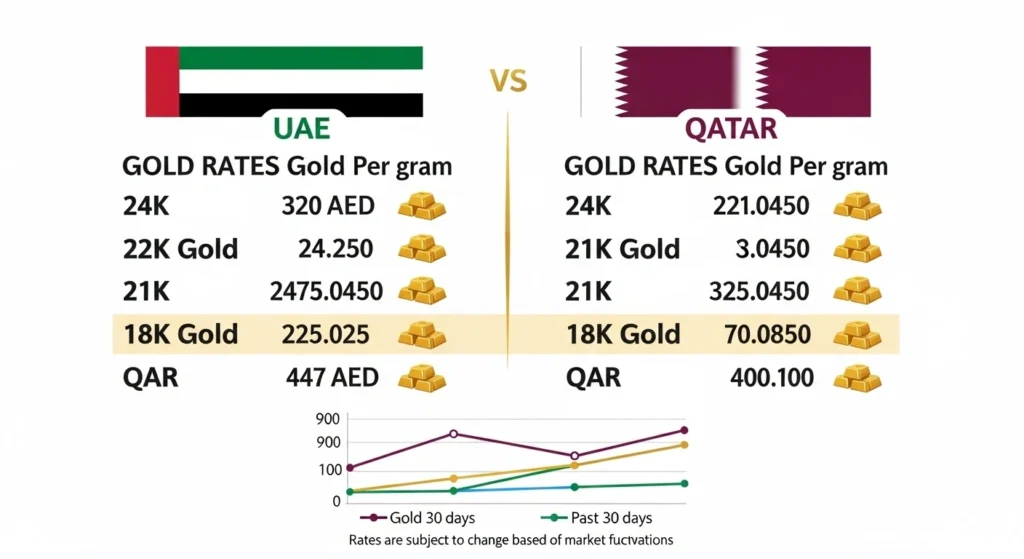
For those comparing across GCC countries before deciding, reviewing prices in gold price in Saudi Arabia or gold price in Qatar can also provide regional perspective.
The final decision should always be based on total landed cost, compliance with customs rules, and clear documentation. Gold buying is not about where it is cheaper on paper, but where it remains cheaper after every cost is counted.
FAQs
Is gold cheaper in UAE than India?
Gold in the UAE is often 2 percent to 8 percent cheaper at the retail level before customs duty and currency conversion. However, final savings depend on making charges, exchange rate, and import rules. I always compare total landed cost, not just per gram price.
How much can I save buying gold in Dubai?
Savings typically range between 3 percent and 10 percent before duty, depending on exchange rate and promotional discounts. On a 50 gram purchase, that can mean 10,000 to 30,000 INR difference. After duty and bank charges, the net saving may reduce significantly.
Is 22K cheaper in UAE?
Yes, 22K gold can be cheaper in the UAE compared to many Indian cities due to competitive retail margins. The price gap often mirrors the 24K difference, usually 3 percent to 6 percent. However, making charges and customs duty still determine final savings.
What is the import duty on gold from UAE to India?
Import duty varies based on government policy and eligibility criteria. If you exceed duty free limits or do not qualify for exemption, customs duty is calculated on assessable value determined at arrival. Rates can change, so I always verify the latest official notification before travel.
How much gold can I bring from UAE to India without duty?
Eligible passengers meeting minimum stay requirements can bring limited quantities duty free, typically up to 20 grams for male passengers and 40 grams for female passengers within value caps. Documentation such as invoice and passport details must be presented at customs.
Should I buy gold coins or bars in UAE for investment?
For pure investment, coins and bars usually make more sense because making charges are minimal, often 1 percent to 3 percent above spot price. Resale is simpler since purity is clear and deductions are lower compared to jewellery with high fabrication costs.
Does AED to INR rate affect savings a lot?
Yes, exchange rate has a major impact. Even a 1 rupee movement in AED to INR can change savings by 10,000 INR on a 10,000 AED purchase. Timing your currency conversion carefully can protect or erase your expected profit.
How do I verify purity and hallmark in UAE?
I check for karat stamp such as 22K or 24K and fineness marking like 916 or 999. The invoice should clearly show weight, purity, making charges, and VAT separately. Always request a detailed bill and confirm return or buyback policy before payment.
Final Verdict Clear and Data Based
After analyzing price tables, exchange rate sensitivity, making charges, and customs rules, my conclusion is simple. Should Indians buy gold in UAE depends entirely on total landed cost, not headline price difference. When I apply the landed cost formula and compare it with Indian retail rates, the answer becomes objective instead of emotional.
Here is the clear three point verdict.
• Yes, it makes sense if your calculated savings after exchange rate, bank markup, and customs duty are still positive, especially for medium to large purchases or promotional buying.
• No, it usually does not make sense for small quantities where duty and conversion charges eliminate the 3 percent to 6 percent retail price gap.
• The best strategy is to calculate using the landed cost method, monitor exchange rate movement, negotiate making charges, and buy only with proper documentation and declaration.
If you refer back to the comparison tables and break even scenarios discussed earlier, you will notice that quantity and exchange rate are the biggest deciding factors. Even a small shift in AED to INR can convert profit into loss.
Most importantly, always comply fully with Indian customs regulations. Any attempt to bypass declaration rules can result in penalties that are far greater than potential savings. In my experience, disciplined calculation and legal compliance are what truly determine whether buying gold in the UAE is worth it.
Data Sources and Methodology
Transparency is essential when answering whether Indians should buy gold in UAE. I base every comparison in this guide on verifiable market data, structured calculation methods, and clearly stated assumptions. This ensures the analysis is reproducible, not opinion driven. Readers can independently verify each step using the referenced sources.
Gold Spot Price Source
International gold pricing is derived from the global XAU USD spot rate traded in financial markets. This reflects the wholesale price of one troy ounce of pure gold before retail premiums. For long term trend context, I cross reference movements using our gold price history chart, which tracks historical fluctuations and helps identify timing patterns.
UAE Retail Pricing Method
UAE retail prices are based on the international spot price converted into AED per gram, plus retailer premium and making charges. The live base rate used in comparisons comes from our gold rate in UAE, which reflects current per gram showroom pricing. Jewellery final price is calculated as gold value plus making charge plus 5 percent VAT.
AED to INR Exchange Rate Source
Currency conversion uses prevailing interbank reference rates as displayed on our AED to INR gold rate page. I include estimated bank or forex markup ranges of 1 percent to 3 percent to simulate realistic transaction costs. Exchange rate timing plays a critical role in determining the final landed cost.
India Customs and Tax References
Customs duty and exemption limits are based on publicly available notifications issued by Indian customs authorities. GST structure and applicable rates are referenced from official Indian tax guidelines. Since customs policies can change, readers are encouraged to verify current circulars before travel.
Assumptions Used in Examples
The scenario tables in this guide use standardized assumptions to maintain consistency:
• Jewellery purity at 22K unless specified
• Making charges between 8 percent and 12 percent depending on design
• Bank or forex markup estimated at 2 percent average
• Retail India comparison based on major metropolitan market averages
• Duty calculations based on eligibility and assessable valuation method
These assumptions are conservative and designed to avoid overstating savings. By clearly stating methodology, readers can adjust inputs according to their personal situation and make an informed decision grounded in data rather than speculation.