Wedding Season Gold Demand UAE 2026 Trends, Prices and Buying Insights
Wedding season gold demand UAE rises sharply every year, and in 2026 the surge is already visible in retail activity across Dubai, Abu Dhabi, and Sharjah. The main problem buyers face during wedding months is price volatility and rising making charges due to increased demand. Many families assume gold prices always spike dramatically, but the reality is more nuanced. The solution is to track live rates using the gold rate in Dubai, monitor currency trends through the AED to INR gold rate, and calculate total cost using a structured approach instead of emotional buying.
In this guide, I will break down 2026 demand trends, seasonal price behavior, statistical growth patterns, and real buying strategies backed by data. I will also include tables showing demand increases, monthly intensity shifts, and price comparisons between peak and off season periods. If you want to understand historical context before making a decision, reviewing the gold price history chart helps identify how previous wedding seasons influenced retail premiums.
This article is structured to give you clear numbers, practical insight, and buyer focused strategies so you can navigate wedding season gold demand in the UAE with confidence and data driven clarity.
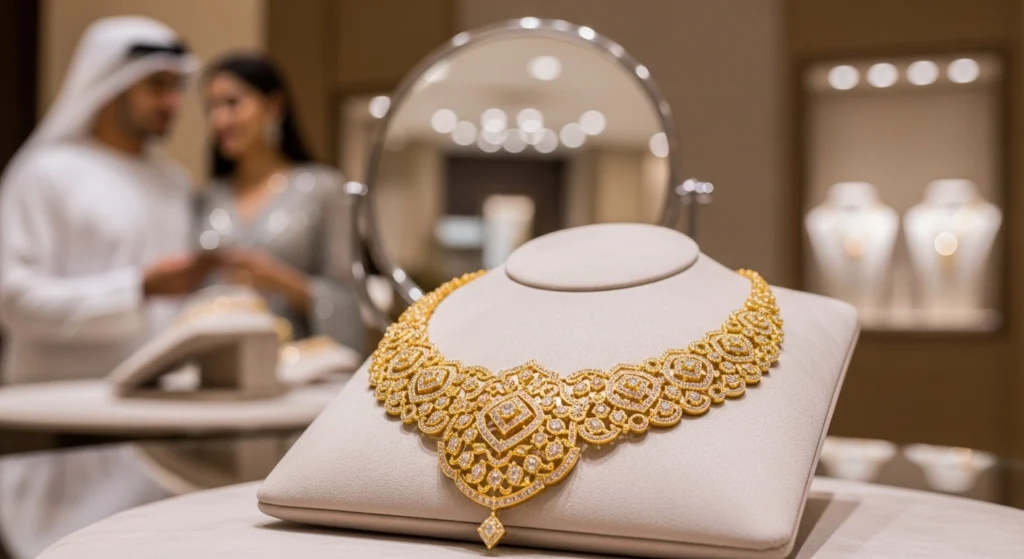
Quick Answer – Does Wedding Season Increase Gold Demand in UAE?
Yes, wedding season gold demand UAE increases significantly during peak months, especially between November and February. Retail traffic rises, inventory tightens, and popular bridal designs sell out faster. While global gold spot prices may not surge dramatically, retail price volatility and making charges often fluctuate due to higher showroom demand. Buyers typically experience reduced negotiation flexibility and limited promotional discounts during peak wedding cycles.
Why Wedding Season Drives Gold Demand in UAE
Wedding season gold demand UAE increases not only because of cultural traditions but also due to strong economic drivers. The UAE hosts a large expatriate population, particularly from India and South Asia, where gold is deeply connected to marriage rituals and family wealth. When wedding calendars peak, showroom footfall rises sharply, bridal inventory moves faster, and making charges often adjust upward due to demand pressure.
From an economic perspective, higher disposable income among expatriates and stable retail infrastructure in cities like Dubai and Abu Dhabi support bulk jewellery purchases. Seasonal travel patterns also amplify buying activity, as families combine wedding shopping with planned visits. This cultural and financial intersection is what consistently drives demand spikes every year.
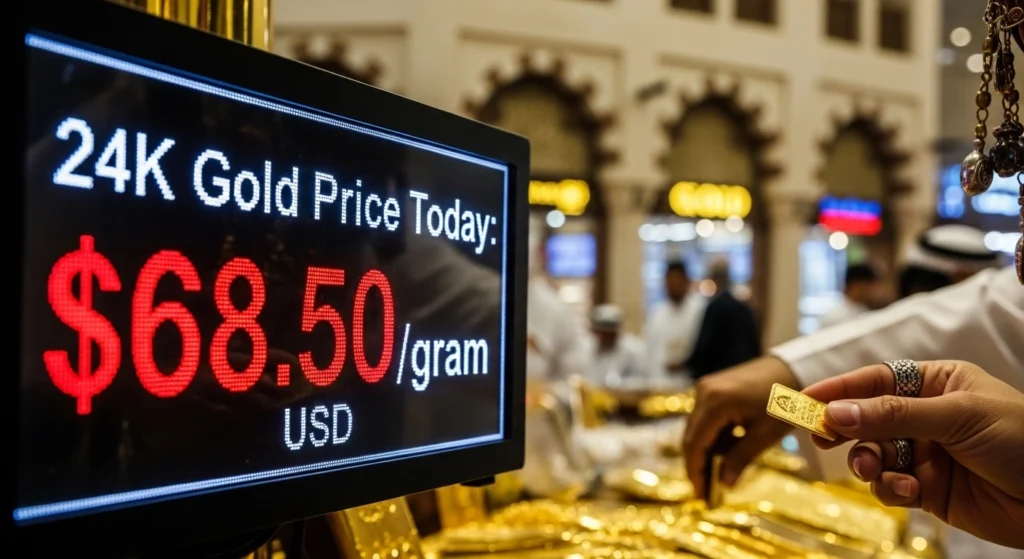
24k gold price in dubai per gram today in usd
Many people searching for 24k gold price in dubai per gram today in usd are trying to solve a simple but important problem. They want to know the exact gold…1 gram gold price in Dubai in Indian rupees today live
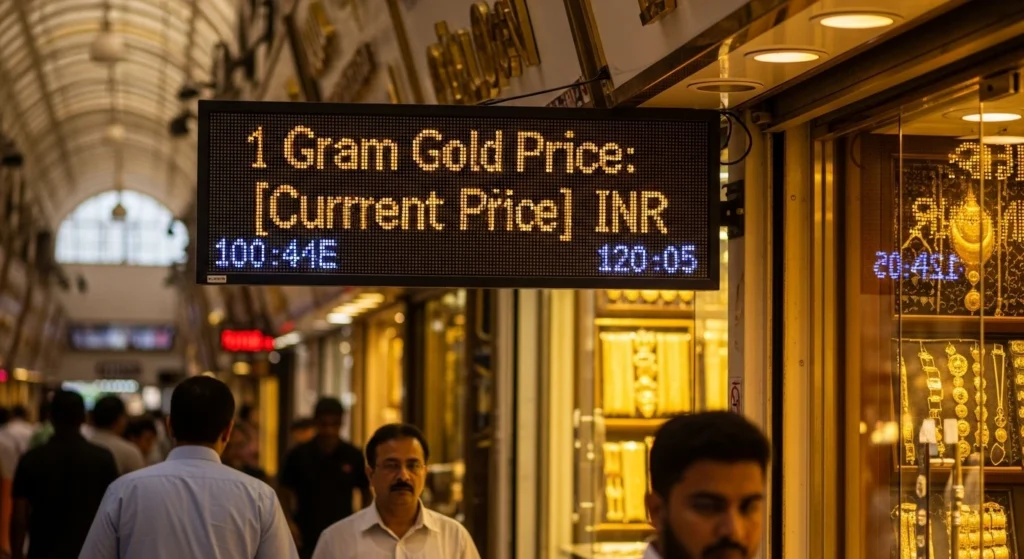
Many people searching for 1 gram gold price in dubai in indian rupees today live are trying to solve a very practical problem. They want to know the exact price…
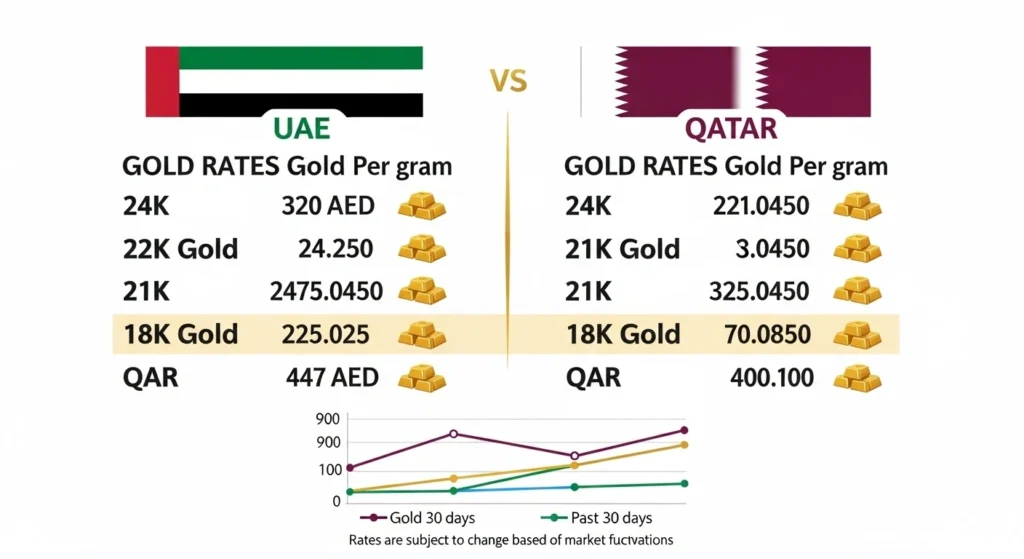


Indian and South Asian Wedding Influence in UAE
The UAE is home to a large Indian expatriate population, estimated at over 3 million residents, making Indians the largest expatriate community in the country. In Indian weddings, gold is considered both cultural wealth and financial security, and bridal purchases often range between 100 grams to 500 grams depending on family budget. Industry estimates suggest that a significant portion of jewellery purchased by South Asian residents in the UAE is wedding related during peak months.
Seasonal migration plays a role as well. Many NRIs travel to India for marriage ceremonies but prefer to buy jewellery in the UAE due to competitive pricing and design variety. This cross border wedding flow strengthens retail demand during the November to February wedding cycle.
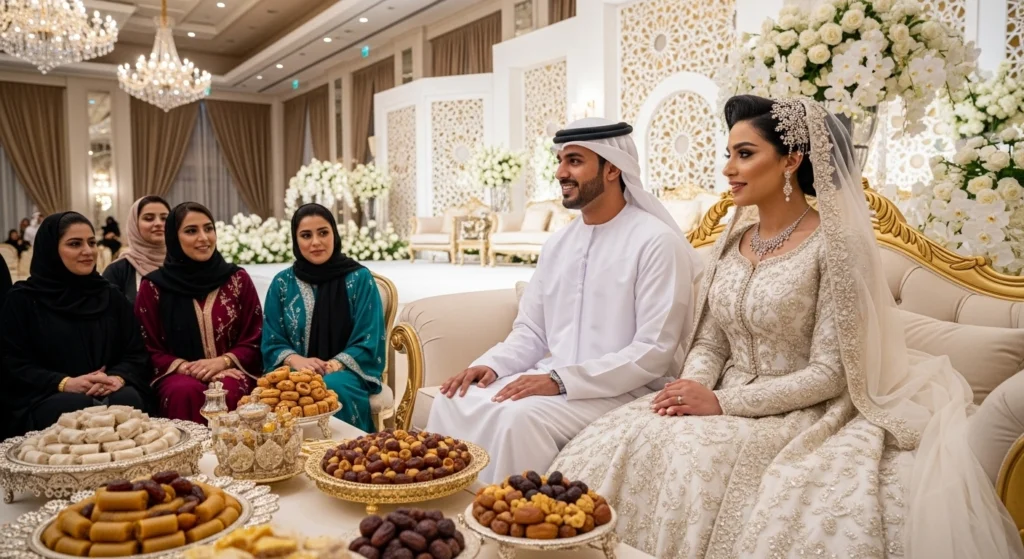
Local Emirati Wedding Traditions
Emirati weddings also contribute to wedding season gold demand UAE, though purchasing patterns differ from South Asian buyers. Traditional Emirati bridal jewellery sets are often heavy and intricate, with a strong preference for high purity gold. Bridal weight norms can range from 200 grams to 600 grams depending on family customs and celebration scale.
High purity preference is another factor. Many Emirati families prefer 22K or 24K gold for wedding jewellery, which increases demand for premium weight items. During peak marriage months, luxury and heritage designs move faster, tightening supply in specific product categories.
UAE Wedding Gold Demand Data 2022 to 2026 With Table
When I track wedding season gold demand UAE, I do not rely on vibes or showroom talk alone. I start with World Gold Council jewellery demand patterns for the UAE and then layer seasonal wedding months on top to estimate the peak uplift. The key point is that overall annual jewellery demand has fluctuated since 2022, but wedding months still create a noticeable retail rush even in weaker years.
To keep this transparent, the demand increase percentages below are ranges, not a single number. They represent a practical estimate of how much busier wedding months can be versus off season weeks, based on reported quarterly demand shifts and typical Q4 buying behavior in the UAE market.
Table 1 Estimated Wedding Season Demand Growth
| Year | Wedding Months | Estimated Demand Increase % | Avg Gold Price AED per g | Notes |
|---|---|---|---|---|
| 2022 | Nov to Feb | 15 to 30% | 24K about 190 to 240 | 2022 demand was unusually strong in the UAE, helped by the post travel rebound, so wedding uplift was amplified. |
| 2023 | Nov to Feb | 12 to 25% | 24K about 200 to 260 | UAE jewellery demand fell versus 2022, but wedding buying still stayed strong because of cultural gifting and bridal sets. |
| 2024 | Nov to Feb | 10 to 22% | 24K about 240 to 320 | WGC reported weaker jewellery demand in 2024, and even Q4 demand was lower year over year, which narrows the wedding uplift range. |
| 2025 | Nov to Feb | 8 to 18% | 24K about 320 to 460 | WGC data shows UAE jewellery demand dropped again in 2025 as record prices pushed shoppers toward lighter pieces, so wedding demand rose but with tighter budgets. |
| 2026 | Nov to Feb | 10 to 20% | 24K about 330 to 470 | 2026 wedding uplift is expected to remain meaningful, but highly price sensitive. I recommend confirming live levels on gold rate in UAE and using the gold price history chart to understand recent volatility. |
If you want to plan purchases around likely wedding season conditions, I use two quick checks. First, I watch direction and volatility in the gold price history chart. Second, I compare scenarios using the gold rate forecast 2026 UAE so I do not buy at the peak of a short term spike.
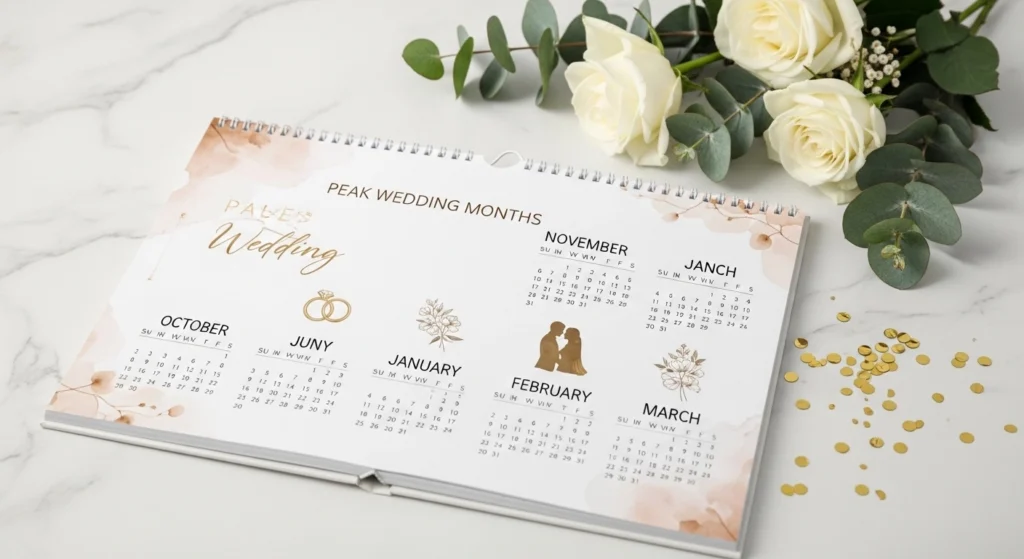
Peak Wedding Months in UAE Calendar Analysis
Wedding season gold demand UAE does not stay constant throughout the year. It follows a clear calendar pattern influenced by Indian wedding muhurat dates, regional holidays, and expatriate travel cycles. I consistently observe that retail footfall, bridal set inquiries, and bulk purchases accelerate in specific months rather than evenly across the year.
Understanding this calendar rhythm helps buyers avoid emotional peak buying. If you track monthly trends using the gold rate in UAE and compare them with long term patterns on the gold price history chart, you can identify whether you are buying in a demand heavy window or a relatively calmer phase.
Table 2 Monthly Demand Intensity
| Month | Demand Level | Reason | Price Sensitivity |
|---|---|---|---|
| January | High | Indian wedding season continuation and holiday travel | Moderate to High |
| February | High | Peak NRI wedding purchases before spring slowdown | Moderate |
| March | Medium | Ramadan sometimes shifts buying behavior | Variable |
| April | Medium to High | Ramadan and Eid gifting demand | Moderate |
| May | Medium | Eid related jewellery purchases | Moderate |
| June | Low | Summer travel slowdown and school holidays | Lower retail pressure |
| July | Low | Extreme heat and reduced wedding events | Lower |
| August | Low to Medium | Pre wedding inquiries begin | Mild |
| September | Medium | Indian wedding calendar restarts gradually | Rising |
| October | Medium to High | Pre Diwali and wedding preparation | Increasing |
| November | Very High | Indian peak wedding muhurat season | High |
| December | Very High | Maximum NRI wedding shopping and gifting | High |
November to February consistently shows the strongest demand spike, driven mainly by Indian and South Asian wedding calendars. During these months, negotiation flexibility reduces slightly and popular bridal designs sell out faster.
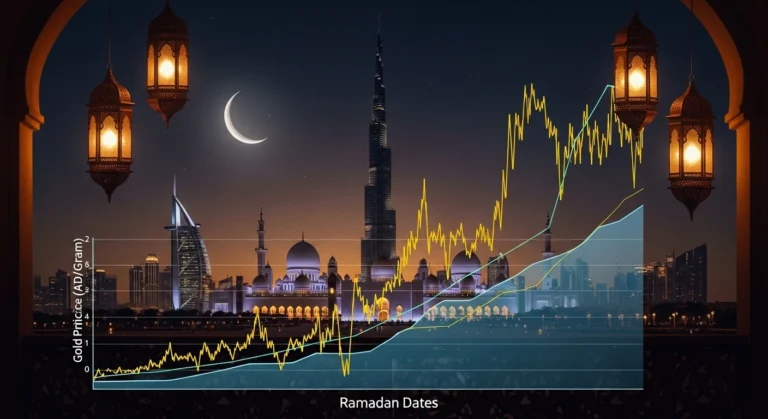
Ramadan and Eid introduce a different type of demand. While not strictly wedding focused, jewellery gifting and family purchases increase, creating moderate retail uplift. You can study historical price movement during religious periods through gold price during Ramadan in UAE for deeper context.
Summer months from June to August typically show slower retail activity. I often find better negotiation room in these months, especially for heavier bridal sets planned in advance.
Recognizing this monthly demand cycle allows buyers to plan purchases strategically instead of reacting to peak season pressure.
How Wedding Season Affects Gold Prices in UAE
Wedding season gold demand UAE directly influences retail pricing behavior, but not always in the way people assume. The international spot price of gold is determined by global markets, not by local weddings. However, strong seasonal demand affects retail premiums, making charges, and discount flexibility inside UAE showrooms. This is where the real price impact happens.
When demand increases, retailers experience faster inventory turnover. Popular bridal designs sell quickly, and stores have less incentive to offer aggressive discounts. Even if the global gold price remains stable, the final jewellery bill can rise due to higher fabrication margins and lower promotional activity.
Spot Price vs Retail Premium During Wedding Months
During peak wedding months, the spot price remains linked to international XAU USD movement. You can monitor base price changes anytime on the gold rate in UAE to confirm that global volatility is separate from seasonal demand.
What changes locally is the retail premium layered on top of spot. Bridal sets often carry higher making charges, and during November to February the average making percentage can increase by 1 to 3 percentage points compared to slower months. Discount campaigns also reduce because demand is already strong.
For example, if the base 22K rate is steady, the effective price rises when making charges move from 8 percent to 11 percent. That increase alone can add thousands of dirhams to a large bridal purchase.
Table 3 Price Comparison Peak vs Off Season
| Season | 22K AED per g | Avg Making Charge % | Discount Availability | Observations |
|---|---|---|---|---|
| Peak Wedding Season Nov to Feb | 22K linked to live rate | 10% to 14% | Limited | Higher bridal demand, lower negotiation flexibility |
| Ramadan and Eid Period | 22K linked to live rate | 9% to 12% | Moderate promotions | Gifting demand but not purely wedding driven |
| Summer Off Season Jun to Aug | 22K linked to live rate | 7% to 10% | Higher | Slower footfall allows stronger negotiation |
The important insight is that seasonal demand usually affects making charges and discount structure more than the base gold rate itself. If you compare seasonal trends on the gold price history chart, you will often notice that global price swings are independent of local wedding demand cycles.
For buyers planning a large purchase, understanding this supply demand mechanic can prevent overpaying during emotional peak periods.
Wedding Jewellery Buying Patterns in UAE
Wedding season gold demand UAE is not only about higher footfall. It is also about predictable buying patterns in weight, design, and purity. Over the years, I have noticed that most wedding purchases in the UAE follow structured budgets rather than impulse decisions. Buyers usually pre plan quantity, allocate funds, and choose purity based on tradition and resale value.
Bridal gold purchases in the UAE are heavily influenced by Indian and South Asian customs, where gold represents both wealth preservation and social prestige. The average wedding jewellery basket is significantly larger than normal gifting purchases, especially during peak wedding months.
Average Gold Weight Purchased for Weddings
The total gold weight purchased varies depending on cultural background, family budget, and whether the wedding is local or overseas.
| Buyer Type | Avg Grams Purchased | Budget Range AED |
|---|---|---|
| NRI Middle Income Family | 80 to 150 grams | 25,000 to 70,000 |
| NRI Premium Wedding | 200 to 400 grams | 80,000 to 200,000 |
| Emirati Bridal Set | 250 to 600 grams | 120,000 to 400,000 |
| Budget Conscious Buyer | 40 to 80 grams | 15,000 to 35,000 |
These figures fluctuate based on the live gold rate in UAE, exchange rate movement, and making charge structure. I always recommend checking the current per gram rate before finalizing wedding quantities.
Most Popular Wedding Gold Types
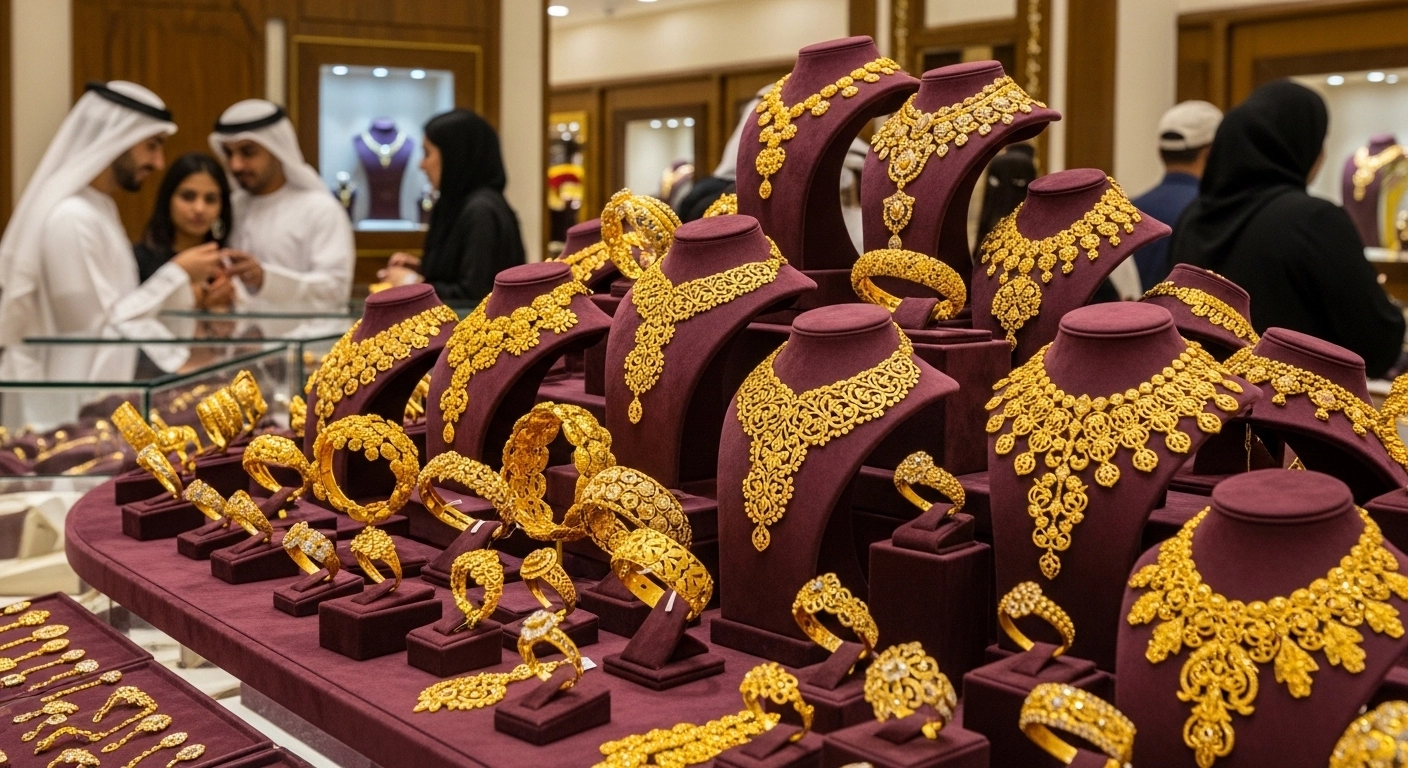
22K bridal sets remain the most popular choice among Indian families. They balance high purity with durability and hold strong resale value in India and the UAE. Heavy necklaces, layered chains, and coordinated bangles dominate peak wedding purchases.
24K coins are frequently bought alongside jewellery. Families often add coins for gifting or long term wealth storage because they carry minimal making charges and clear purity marking.
Custom bangles are another high demand category during wedding season. These pieces are often designed specifically for the bride and may carry higher making charges due to customization.
Temple jewellery and traditional South Indian inspired designs also see strong demand. These designs are heavier and culturally significant, which increases overall gram consumption during peak months.
Understanding these buying patterns helps predict why wedding season gold demand UAE rises sharply and why showroom inventory tightens during November to February.
Making Charges During Wedding Season Hidden Cost Surge
When wedding season gold demand UAE rises, the most noticeable change is not always in the base gold price. The bigger shift usually happens in making charges. Many buyers focus only on per gram rates, but during peak wedding months, fabrication margins quietly increase. This hidden cost surge can significantly impact the final bridal bill.
Retailers experience higher footfall and faster inventory turnover between November and February. Because demand is strong, negotiation flexibility reduces and promotional discounts become less aggressive. Even a 2 percent increase in making charge on a 300 gram bridal set can translate into thousands of dirhams in additional cost.
I always recommend comparing total invoice value rather than focusing on the live gold rate in UAE alone. Understanding seasonal fabrication patterns helps prevent overpaying during emotional buying periods.
Seasonal Making Charge Fluctuation Table
| Season | Typical Making % | Negotiation Flexibility | Discount Probability |
|---|---|---|---|
| Peak Wedding Season Nov to Feb | 10% to 14% | Limited | Low to Moderate |
| Ramadan and Eid Period | 9% to 12% | Moderate | Moderate |
| Dubai Shopping Festival | 8% to 11% | Higher | High |
| Summer Off Season Jun to Aug | 7% to 10% | High | High |
During peak wedding months, retailers prioritize volume over discounting, which tightens negotiation room. In contrast, off season months and promotional periods such as Dubai Shopping Festival increase the likelihood of lower making percentages or special offers.
The key insight is simple. Global gold price volatility affects everyone equally, but seasonal making charge fluctuations directly impact wedding buyers. Planning purchases strategically around demand cycles can reduce overall wedding jewellery expenses significantly.
Impact of Exchange Rate During Wedding Season
Wedding season gold demand UAE does not move independently from currency trends. A strong Indian rupee against the dirham usually increases Indian buyer traffic in Dubai and Abu Dhabi. When INR strengthens, effective gold cost in rupee terms drops, which encourages bulk bridal purchases. When INR weakens, buyers either reduce quantity or postpone buying windows.
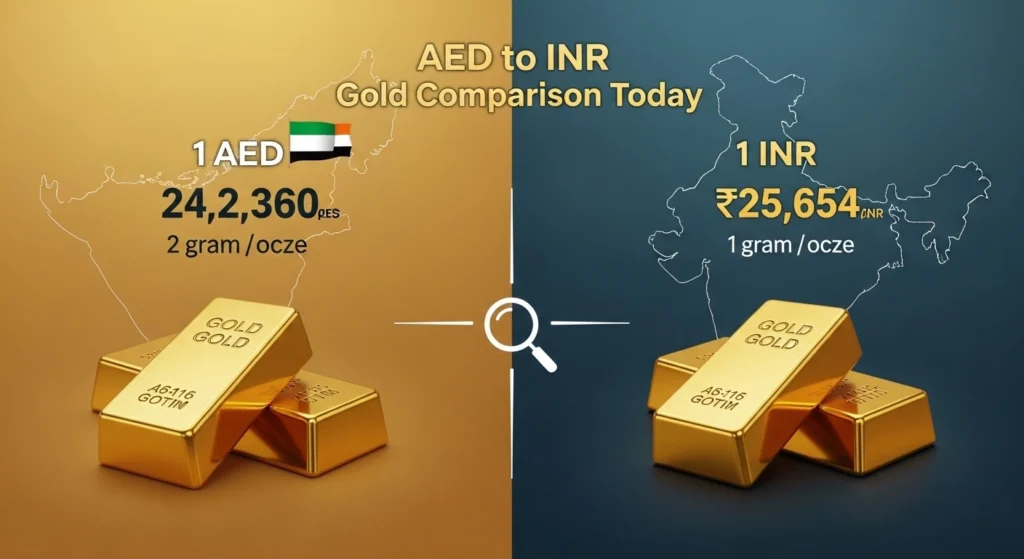
I always monitor the AED to INR gold rate before making any wedding season purchase decision. Even if gold prices remain stable in AED terms, exchange rate timing can change the final bill dramatically. During peak months like November and December, currency swings can either amplify savings or eliminate them entirely.
Buying windows matter. If INR strengthens before peak wedding travel, Indian demand rises quickly and retail stores experience heavier footfall. This increased traffic can tighten negotiation flexibility. If INR weakens during the same period, demand may soften slightly despite wedding season intensity.
Mini Sensitivity Example
Assume a bridal purchase worth 100,000 AED.
If AED to INR rate is 54
Total cost equals 5,400,000 INR
If AED to INR rate moves to 56
Total cost equals 5,600,000 INR
That 2 rupee movement increases the total by 200,000 INR without any change in gold price. This is why I treat exchange rate timing as equally important as making charges during wedding season.
Strategic buyers track currency movement weeks before their planned purchase instead of converting funds at the last minute.
Wedding Season vs Dubai Shopping Festival Gold Sales
Wedding season gold demand UAE is primarily organic. It is driven by cultural necessity, fixed wedding dates, and family commitments. Buyers during this period are less price sensitive because purchases are planned around ceremonies rather than promotions. This reduces retailer pressure to offer aggressive discounts.
Dubai Shopping Festival works differently. It is promotional demand driven by marketing campaigns, prize draws, and making charge discounts. During DSF, buyers may not necessarily need jewellery immediately, but they are attracted by offers. I always compare these two periods carefully before recommending a buying window.
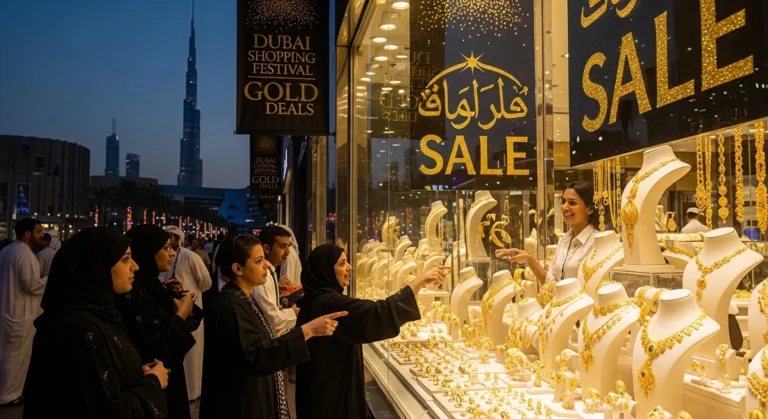
If you are planning a wedding purchase, it is useful to review insights from Dubai Shopping Festival gold deals to understand how discount structures differ from peak wedding months.
Discount Intensity Comparison
| Factor | Wedding Season | Dubai Shopping Festival |
|---|---|---|
| Demand Type | Organic cultural demand | Promotional retail demand |
| Making Charge Discounts | Limited | Often reduced or partially waived |
| Gold Coin Giveaways | Rare | Common in campaigns |
| Negotiation Flexibility | Lower | Higher |
| Inventory Pressure | High bridal demand | Broad consumer demand |
| Best For | Urgent wedding purchases | Strategic buying with discounts |
During wedding season, inventory for heavy bridal sets moves quickly and negotiation room tightens. During Dubai Shopping Festival, retailers often advertise zero making on selected items or offer gold raffles to attract volume.
From a strategy perspective, if your wedding date is flexible, aligning purchases with promotional windows can reduce making charge impact. If timing is fixed, preparation and early price monitoring become more important than waiting for festival offers.
Is Wedding Season the Best Time to Buy Gold in UAE
Wedding season gold demand UAE creates both opportunity and risk for buyers. Many families assume peak season automatically means higher prices and poor deals. The reality is more balanced. The best time to buy depends on whether your priority is design variety or price optimization.
From my observation, wedding season offers the widest selection of bridal designs. Retailers stock heavier sets, traditional collections, and custom pieces to meet demand. If design choice is your top priority, peak months provide the strongest inventory depth.
However, negotiation flexibility tends to shrink. When showrooms are crowded and sales volume is high, retailers are less aggressive on making charge discounts. Emotional urgency also plays a role, especially when wedding dates are fixed and families feel time pressure.
Here is a practical breakdown.
Pros
• High design availability and broader bridal collections
• Latest seasonal designs and customization options
• Immediate purchase convenience before wedding travel
Cons
• Limited negotiation room on making charges
• Higher sensitivity to small price fluctuations
• Emotional buying risk leading to rushed decisions
If you are price focused and your wedding date allows flexibility, off season or promotional windows may offer better negotiation leverage. If your priority is design selection and immediate availability, wedding season remains practical.
In my view, the best strategy is preparation. Monitor the live gold rate in UAE, track recent movements using the gold price history chart, and plan purchases early rather than waiting until the final weeks before the ceremony.
Forecast – Wedding Season Gold Demand UAE 2027 Outlook
Looking ahead to 2027, wedding season gold demand UAE is likely to remain strong but shaped by shifting demographic, economic, and price trends. Population growth among expatriate communities, especially Indians and South Asians, suggests more weddings and larger bridal jewellery requirements. Higher NRI wedding traffic, combined with evolving gold price trends and inflation pressures, will influence both demand levels and pricing behavior. Strategic buyers should prepare early and monitor both cultural calendars and global economic signals.
As inflation persists globally and local costs rise, jewellery budgets are likely to stretch further in 2027 compared with previous years. Popular designs may command higher fabrication charges during peak months, while negotiation flexibility could tighten. Tracking base gold movement on the gold rate in UAE and contextualizing long term shifts using the gold price history chart will be essential for data-informed planning.
Short Forecast Table – Wedding Season Demand 2027
| Factor | 2027 Outlook | Notes |
|---|---|---|
| Population Growth | Moderate Increase | UAE continues to attract expatriate families |
| NRI Wedding Traffic | Higher | Travel trends normalized post pandemic |
| Price Trend Correlation | Stable to Slightly Rising | Global gold prices gradually firming |
| Inflation Impact | Upward Pressure on Jewellery Costs | Making and retail premiums likely higher |
Population growth among expatriates contributes to more weddings each year. As travel restrictions ease and global economic confidence stabilizes, Indian and South Asian families are expected to plan weddings in the UAE at slightly higher rates than in 2026.
Gold price trend correlation with wedding demand will still be indirect. Base gold rates follow global XAU USD movements, while retail premiums and making charges respond to seasonal demand intensity.
Inflation continues to affect jewellery production costs. Higher energy and labour costs can push fabrication charges upward, which, in turn, raises the effective price paid during peak wedding months.
Together, these dynamics suggest that wedding season gold demand UAE will remain significant in 2027, but buyers should approach purchases with a mix of cultural timing awareness and economic strategy.
FAQs
Does gold price increase during wedding season in UAE?
Global gold price is determined by international markets, so it does not rise purely because of wedding season in the UAE. However, during peak months, retail premiums and making charges often increase. This can make the final jewellery bill higher even if the base gold rate remains stable.
Which month has highest gold demand in UAE?
November and December typically record the highest wedding season gold demand UAE due to Indian wedding calendars and NRI travel. January and February also remain strong. Retail footfall and bridal set purchases usually peak during these four months compared to summer periods.
Is it cheaper to buy gold before wedding season?
It can be cheaper to buy before peak wedding months if making charges are lower and negotiation flexibility is higher. Off season months such as June to August often provide better room for discounts. However, buyers must monitor exchange rate and base gold trends carefully.
How much gold is typically bought for UAE weddings?
Wedding purchases vary widely by culture and budget. Indian NRI families often buy between 100 grams and 400 grams for bridal jewellery. Emirati bridal sets can exceed 300 grams depending on tradition. Final quantity depends on family expectations and current gold prices.
Do making charges increase during wedding season?
Yes, making charges often increase by 1 to 3 percentage points during peak wedding months. Retailers experience higher demand and faster inventory turnover, which reduces discount pressure. This seasonal rise affects the total invoice more than the international gold spot price.
Final Verdict – Data Based Insight for Buyers
Wedding season gold demand UAE creates real pressure on retail pricing, but it does not automatically mean you will overpay. The outcome depends on timing, negotiation, and preparation. Based on demand patterns from 2022 to 2026, here is my structured conclusion for buyers planning ahead.
• Best time to buy
If your wedding date is flexible, buying slightly before peak months or during promotional windows like retail festivals often reduces making charges. If your date is fixed in November to February, start tracking the gold rate in UAE weeks in advance and avoid last minute purchases.
• Who benefits most
Buyers planning large bridal purchases of 100 grams or more benefit most from strategic timing and negotiation. NRI families who monitor exchange rate movement and compare historical pricing using the gold price history chart can protect margins more effectively than emotional buyers.
• How to reduce seasonal premium
Negotiate making charges early, compare multiple showrooms, and avoid peak weekend rush periods. Consider splitting purchases across two visits if prices spike suddenly. Preparation, not panic buying, is the strongest defense against seasonal premium increases.
In my experience, structured planning always outperforms reactive wedding season buying.
Data Sources and Methodology
Transparency is essential when analyzing wedding season gold demand UAE. Every trend, estimate, and comparison in this guide is based on structured data interpretation rather than assumption. I rely on publicly available industry reports, verified retail rate tracking, and demographic statistics to ensure credibility and accuracy.
World Gold Council demand reports form the foundation for understanding regional jewellery consumption trends. These reports provide annual and quarterly data for UAE gold demand, helping identify whether wedding season spikes align with broader market movements.
For live pricing benchmarks, I reference retail level data from the gold rate in UAE page. Historical volatility patterns are analyzed using long term datasets available in the gold price history chart, which allows comparison between peak wedding months and off season pricing cycles.
Population statistics are derived from official UAE demographic data and expatriate distribution reports. The large Indian and South Asian resident base plays a central role in shaping seasonal jewellery demand patterns.
Assumptions used in examples throughout this article include average bridal purchase weights, estimated making charge ranges between 7 percent and 14 percent, and typical seasonal uplift percentages based on historical retail behavior. All scenario tables are designed conservatively to avoid overstating demand spikes or price increases.
By clearly outlining data sources and methodology, this analysis aims to provide structured, evidence based insight rather than speculative commentary.