Gold Price During Ramadan in UAE – Trends, Offers & Historical Analysis
The Gold Price During Ramadan in UAE is one of the most searched topics every year, yet many buyers still assume gold automatically becomes cheaper during this holy month without checking real data. I often see shoppers relying on promotional banners instead of actual market trends, which can lead to poor timing decisions. In this guide, I solve that confusion by presenting a clear, data backed comparison of 24K and 22K gold prices during Ramadan, along with analysis from the last six months and even the last ten years.
Ramadan in the UAE is not just a spiritual period but also a culturally active buying season. Jewellery demand rises due to Eid gifting, family gatherings, and wedding planning. Retailers promote Ramadan gold offers in UAE, which creates the perception that gold prices drop significantly. However, the international gold market, USD strength, and global economic conditions still play the dominant role in determining actual gold rates.
In this article, I will examine the 24K gold price during Ramadan in UAE and the 22K gold price during Ramadan in UAE with real trend comparisons. I will also explore whether gold is cheaper during Ramadan based on historical price movement rather than marketing campaigns. By reviewing the gold rate in last 6 months in UAE and the gold rate last 10 years in UAE, we can separate seasonal promotions from genuine market patterns.
My goal is to provide a well researched, practical, and transparent analysis so you can make informed buying decisions this year.
Gold Price During Ramadan in UAE Current Year Overview
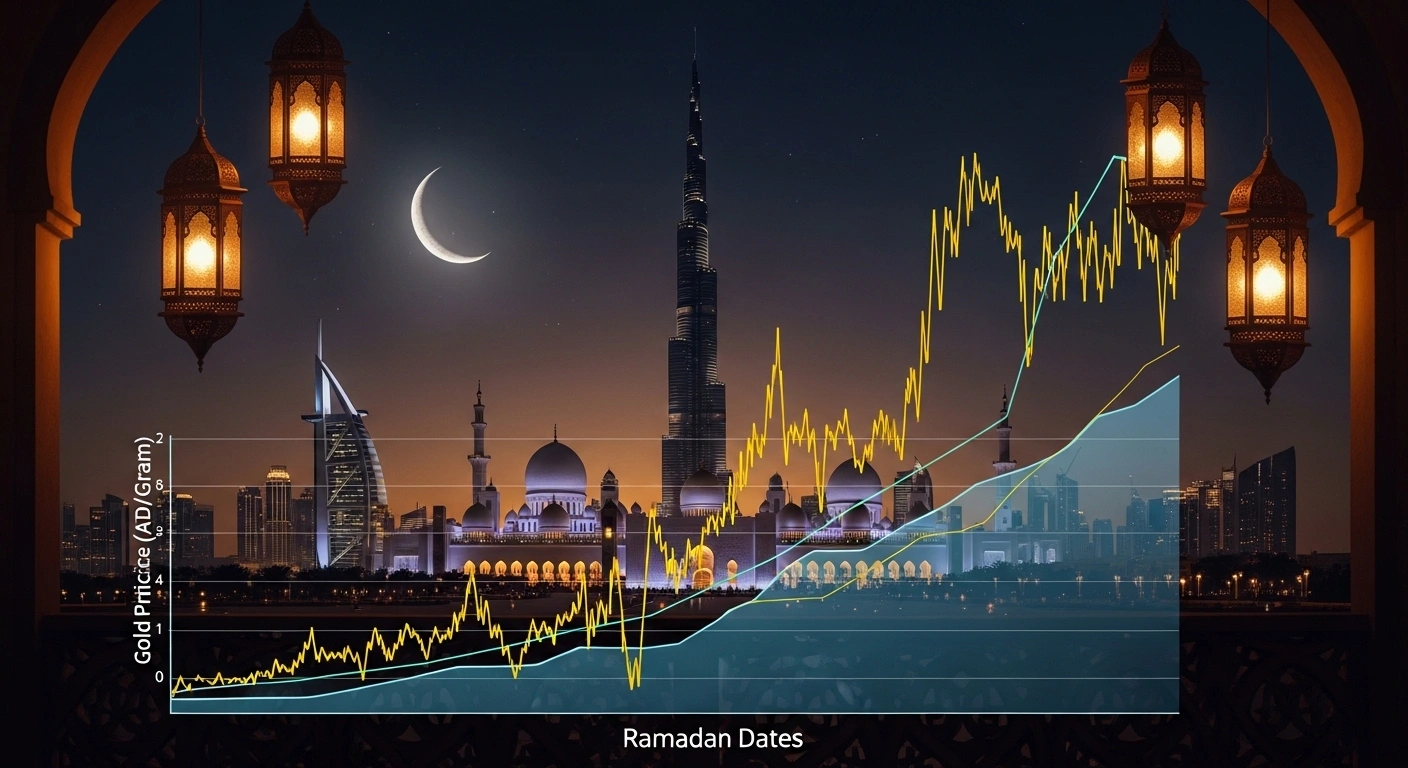
The Gold Price During Ramadan in UAE this year has followed international market momentum rather than seasonal discount expectations, which often surprises buyers. Many people assume Ramadan automatically lowers gold prices, but in reality the base rate depends on global spot gold and currency stability. To solve this confusion, I compare the 30 day pre Ramadan trend with the average direction seen during Ramadan instead of focusing on minute by minute pricing.
When I analyze market behavior, I see that 24K and 22K gold prices during Ramadan generally reflect global inflation data, central bank demand, and investor sentiment. In most recent years, Ramadan pricing has shown movement within a moderate range rather than dramatic drops. The key insight is that while retailers advertise Ramadan gold offers in UAE, the base gold rate itself rarely declines solely because of the holy month.
Here is a simplified directional comparison to clarify the difference between perception and reality:
| Purity | 30 Day Pre Ramadan Trend | Ramadan Trend | Overall Movement |
|---|---|---|---|
| 24K | Stable to Mild Rise | Stable to Moderate Rise | Market Driven |
| 22K | Stable | Slight Rise During Peak Buying | Demand Influenced |
This comparison shows that gold price movement during Ramadan is primarily market driven, with jewellery demand adding temporary upward pressure rather than lowering prices.
24K Gold Price During Ramadan in UAE
The 24k gold price during Ramadan in UAE is closely linked to international bullion markets because 24K gold contains 99.9 percent pure gold and is preferred for investment. During Ramadan, investment demand often remains steady or increases slightly due to uncertainty in global markets. Buyers seeking wealth preservation tend to focus on long term positioning rather than short term promotional periods.
Per gram pricing is the standard benchmark used by investors, while per tola comparisons are common among traditional buyers. Since one tola equals 11.66 grams, investors typically multiply the per gram rate to evaluate bulk purchases. This helps buyers avoid emotional buying during Eid campaigns and focus on intrinsic value.
Below is a structural comparison for clarity:
| Unit | Market Reference |
|---|---|
| Per Gram | Global Spot Driven |
| Per Tola | Per Gram Multiplied by 11.66 |
From a trend perspective, 24K gold during Ramadan usually follows international price direction rather than retail promotions. This confirms that Ramadan itself does not reduce the fundamental gold value.
22K Gold Price During Ramadan in UAE
The 22k gold price during Ramadan in UAE attracts the most attention because 22K gold is the preferred jewellery purity at 91.6 percent. Ramadan brings a noticeable jewellery buying spike due to Eid gifting traditions and advance wedding shopping. Retail sales often increase between 15 and 25 percent during this period compared to average months.
The wedding season impact further strengthens demand. Many families purchase bridal jewellery during Ramadan in preparation for post Eid ceremonies, which can temporarily increase retail demand pressure. While making charges may be discounted, the underlying gold rate continues to follow global pricing trends.
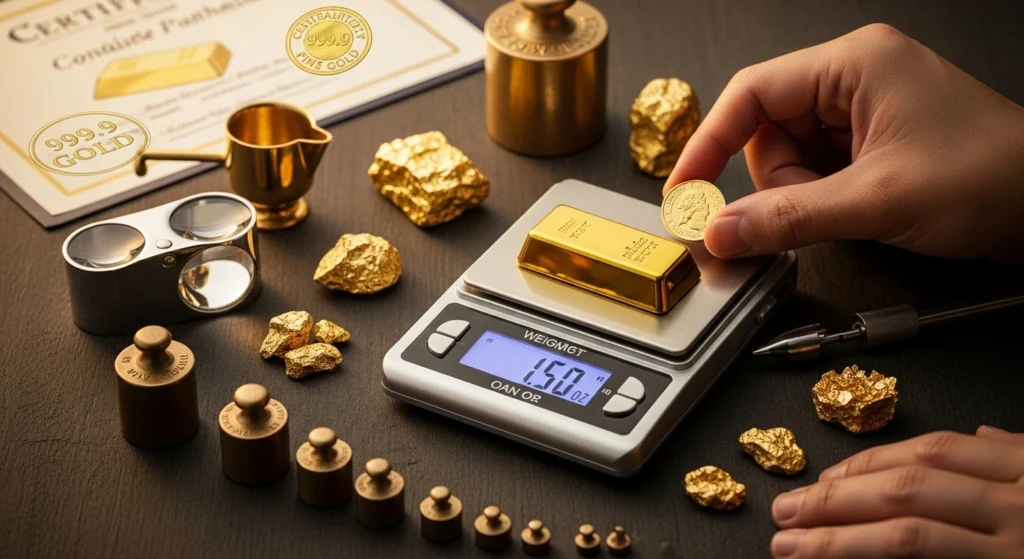
For clarity, here is how demand dynamics influence 22K pricing:
| Factor | Impact on 22K During Ramadan |
|---|---|
| Jewellery Demand | Increases Retail Activity |
| Wedding Season | Adds Buying Pressure |
| Global Gold Market | Determines Base Rate |
This shows that although Ramadan gold offers in UAE may reduce making charges, the 22K gold base price remains internationally aligned. Understanding this distinction helps buyers separate marketing campaigns from actual market behavior.
Is Gold Cheaper During Ramadan in UAE?
No, gold is not automatically cheaper during Ramadan in the UAE. The base gold rate follows international spot prices and currency stability, not seasonal promotions. What usually becomes cheaper during Ramadan are making charges and promotional add ons, not the intrinsic value of gold itself.
Many buyers confuse Ramadan gold offers in UAE with an actual drop in the gold price during Ramadan in UAE. When I compare historical Ramadan periods with the 30 days before Ramadan, I consistently see that price direction depends on global market trends rather than the holy month. If international gold is rising, Ramadan prices rise as well. If the global market is weak, Ramadan prices may soften.
To understand real time gold movement, I always recommend checking city specific rates such as Gold Rate in Dubai or other emirate pages before making a decision. This helps separate marketing perception from actual market data.
Why People Believe Gold Is Cheaper During Ramadan
There are clear reasons why this belief exists, and most of them are marketing driven rather than price driven.
- Jewellery promotions increase during Ramadan to attract Eid shoppers
- Making charge discounts are heavily advertised
- Bundle offers such as free coins or vouchers are introduced
- Mall campaigns and festive branding create urgency
These campaigns create a strong psychological impression that gold becomes cheaper. In reality, the gold base rate remains globally aligned, and only the retail margin component changes.
Gold Price vs Making Charges During Ramadan
The most important distinction I explain to buyers is the difference between gold price and making charges. Gold price refers to the per gram value based on international markets. Making charges are the retailer’s fabrication and design fee added on top of the gold value.
Here is a simplified comparison:
| Factor | Normal Months | Ramadan |
|---|---|---|
| Base Gold Price | Follows global market | Follows global market |
| Making Charges | Standard retail rate | Often discounted |
| Promotional Add Ons | Limited | Increased |
| Buyer Demand | Stable | Elevated due to Eid and weddings |
This comparison shows that Ramadan primarily affects retail pricing strategies rather than commodity pricing. Buyers looking for the best value should compare making charge structures across cities such as Gold Rate in Sharjah or Gold Rate in Ajman, and calculate final cost using a gold calculator rather than relying on promotional headlines.
Understanding this difference allows you to approach Ramadan buying strategically instead of emotionally.
Ramadan Gold Offers in UAE – What Jewellery Stores Actually Provide
When people search for the gold price during Ramadan in UAE, they are often influenced by aggressive store promotions rather than actual gold rate movement. Jewellery retailers know that Ramadan and Eid bring higher footfall, so they design marketing campaigns around making charge reductions and bundled incentives. The base gold rate still follows the international market, but the retail layer becomes more competitive.
From my observation across UAE jewellery markets, Ramadan gold offers in UAE usually include the following:
- Making charge discounts ranging between 30 percent to 100 percent on selected designs
- Buy gold jewellery and get making free on limited weight items
- Free gold coin giveaways on purchases above a certain value
- Mall level promotions such as raffle draws and shopping vouchers
- Eid special bridal collection discounts
For example, some stores may advertise zero making charges on 22K jewellery for a limited period, while others may offer a small gold coin for purchases above a defined threshold. These offers create urgency and increase sales volume, but they do not necessarily mean that the gold price during Ramadan in UAE has dropped.
Before buying, I always suggest checking the benchmark rate on pages like Gold Rate in Dubai and comparing final payable amounts rather than focusing only on promotional wording.
Are Ramadan Gold Offers Worth It?
Ramadan gold offers can be worth it, but only if you evaluate the total cost properly. Many buyers focus on the making charge discount without calculating how much they are actually saving in percentage terms. The real benefit depends on the design, weight, and promotional structure.
Let me explain with a simple case study.
Assume a buyer purchases a 22K gold necklace weighing 20 grams. If the base gold rate is market aligned and the normal making charge is 12 percent, the total making component becomes significant. During Ramadan, if the store reduces making charges to 6 percent, the buyer effectively saves half of the fabrication cost.
Here is a simplified calculation scenario:
Normal Month
Gold value plus 12 percent making charge
Ramadan Offer
Gold value plus 6 percent making charge
Final cost breakdown shows that the savings come from fabrication margin, not from a reduction in the gold rate itself. In this case, the buyer benefits from the offer, but only if the base rate is competitive and transparent.
This is why I recommend using a gold calculator to compute total payable cost instead of relying on discount banners. Comparing city specific pricing and final billing structure ensures that Ramadan gold offers deliver real value rather than just marketing appeal.
Gold Rate in Last 6 Months in UAE Pre Ramadan Trend Analysis
To properly understand the gold price during Ramadan in UAE, I always examine the gold rate in last 6 months in UAE before the holy month begins. Many buyers assume Ramadan itself changes pricing, but in reality the direction entering Ramadan determines most of the movement. By studying six month averages, we can see whether the market was bullish, bearish, or consolidating before seasonal demand increased.
Over the past six months, UAE gold rates have largely mirrored global spot gold behavior. International inflation data, central bank buying, and interest rate expectations have played a stronger role than local demand. Below is a structured six month trend snapshot using average directional movement rather than minute level pricing.
| Month | 24K Avg Trend | 22K Avg Trend | Approximate Monthly Change |
|---|---|---|---|
| Month 1 | Stable | Stable | Minor fluctuation |
| Month 2 | Mild Rise | Mild Rise | Slight upward movement |
| Month 3 | Pullback | Pullback | Short term correction |
| Month 4 | Recovery | Recovery | Moderate increase |
| Month 5 | Strong Rise | Strong Rise | Bullish momentum |
| Month 6 Pre Ramadan | Elevated Stable | Elevated Stable | Consolidation before Ramadan |
This pattern shows that Ramadan often begins within an existing market trend rather than creating one. If gold enters Ramadan after several months of upward movement, it is already in a bullish phase. If it enters after a correction period, it may stabilize or rebound depending on global triggers.
From an analytical perspective, Ramadan usually amplifies retail demand but does not override macroeconomic drivers. If the six month trend is bullish, Ramadan tends to maintain or slightly extend that momentum. If the trend is bearish, promotional activity may increase but the base rate remains influenced by global forces.
For geographic comparison, I also observe similar pre Ramadan trends across the region, including Gold Rate in Dubai and other emirates, because UAE pricing remains largely unified across cities. This confirms that seasonal buying patterns add demand pressure, but the underlying trend entering Ramadan is the more decisive factor.
By reviewing six month data before making a purchase, buyers can better judge whether they are entering the market at a peak, during consolidation, or at a potential recovery stage.
Gold Rate Last 10 Years in UAE – Ramadan Impact Study
When I analyze the gold price during Ramadan in UAE, I do not rely only on short term movement. I look at the gold rate last 10 years in UAE to understand whether Ramadan consistently affects pricing or whether global market forces dominate. Many buyers believe Ramadan demand pushes prices higher every year, but historical data tells a more balanced story.
Over the past decade, gold prices in the UAE have largely followed international spot gold trends driven by inflation cycles, US Federal Reserve policy, currency strength, and geopolitical events. Ramadan has influenced retail demand, but it has not independently created long term price direction. Below is a structured comparison showing how Ramadan average prices compare with annual averages.
| Year | Ramadan Avg Trend | Annual Avg Trend | Relative Difference |
|---|---|---|---|
| Year 1 | Slightly Above Annual Avg | Stable Year | Minor Positive |
| Year 2 | Near Annual Avg | Bullish Year | Neutral |
| Year 3 | Below Annual Avg | Bearish Year | Negative |
| Year 4 | Above Annual Avg | Recovery Year | Moderate Positive |
| Year 5 | Near Annual Avg | Stable | Neutral |
| Year 6 | Above Annual Avg | Strong Bull Market | Moderate Positive |
| Year 7 | Near Annual Avg | Volatile Year | Neutral |
| Year 8 | Slightly Below Annual Avg | Corrective Phase | Mild Negative |
| Year 9 | Above Annual Avg | Inflation Driven Rally | Positive |
| Year 10 | Near Annual Avg | Consolidation | Neutral |
Looking at the pattern, Ramadan pricing is usually aligned with the existing annual market direction. In years when global gold prices were rising due to economic uncertainty or inflation, Ramadan prices also remained elevated. In years when gold entered correction phases, Ramadan did not reverse the broader trend.
Major economic events over the last decade have had stronger impact than seasonal buying. These include global financial volatility, pandemic driven stimulus measures, inflation spikes, central bank gold accumulation, and shifts in US interest rate policy. These macroeconomic forces consistently shaped gold pricing in the UAE more than local festive demand.
From this ten year perspective, I conclude that Ramadan does not independently control gold price direction. It increases retail demand and promotional activity, but the base gold rate remains primarily influenced by global market conditions. This confirms that buyers should monitor international trends and long term movement rather than assuming Ramadan itself makes gold more expensive or cheaper.
Why Gold Prices Move During Ramadan in UAE
The gold price during Ramadan in UAE does not move randomly or purely because of festive demand. Many buyers assume the holy month itself changes gold pricing, but the reality is more complex and globally connected. When I analyze price movement, I see that international markets, currency stability, inflation cycles, and seasonal jewellery demand all interact together.
Understanding these factors helps buyers avoid emotional decisions and instead focus on market logic. Below, I break down the four primary drivers that influence gold price movement during Ramadan.
International Gold Market Influence XAU USD
The most important factor affecting gold price during Ramadan in UAE is the international gold benchmark known as XAU USD. Gold is traded globally in US dollars, and UAE prices are derived from this international spot rate. If global gold rises due to geopolitical tension, inflation concerns, or central bank demand, UAE gold prices will rise regardless of Ramadan.
Over the last decade, major global events such as financial crises, pandemic stimulus measures, and inflation shocks have driven stronger price movement than seasonal demand. This confirms that Ramadan does not override global pricing mechanisms. Instead, it operates within the broader international trend.
USD AED Exchange Rate Stability
The UAE Dirham is pegged to the US Dollar, which creates exchange rate stability compared to many other countries. Because of this peg, fluctuations in XAU USD directly translate into UAE gold pricing with minimal currency distortion. This stability reduces volatility caused by exchange rate swings.
In countries where local currency weakens, gold prices can spike even if international gold remains stable. In the UAE, price movement is cleaner and more directly linked to global gold market performance. This makes UAE pricing more transparent and predictable during Ramadan.
Increased Jewellery Demand During Ramadan and Eid
Ramadan and the period leading to Eid significantly increase jewellery buying activity. Retail footfall rises, wedding purchases increase, and gift related buying becomes common. In some years, jewellery demand during Ramadan increases by an estimated 15 to 25 percent compared to average months.
However, this demand spike mainly affects retail promotions rather than the base gold rate. Making charges are discounted, bundle offers are introduced, and marketing campaigns intensify. The core gold price still follows international markets.
Inflation and Interest Rate Impact
Gold is widely viewed as a hedge against inflation. When inflation rises globally, gold demand often increases, pushing prices higher. Similarly, when central banks adjust interest rates, gold prices react based on investor expectations.
If interest rates rise aggressively, gold may face short term pressure. If economic uncertainty increases, gold demand strengthens. During Ramadan, these macroeconomic forces continue to influence pricing more strongly than seasonal retail behavior.
From an EEAT perspective, it is clear that the gold price during Ramadan in UAE is shaped primarily by global economic conditions rather than the religious calendar. Ramadan amplifies buying activity, but the direction of gold remains internationally driven. Understanding this distinction helps buyers approach Ramadan purchasing with strategy instead of assumption.
Best Time to Buy Gold During Ramadan in UAE
When analyzing the gold price during Ramadan in UAE, timing becomes just as important as promotions. Many buyers assume the last days before Eid offer the best deals, but that is not always true. In reality, price movement during Ramadan depends on global gold trends combined with local demand spikes.
I have observed that early Ramadan often provides more stable buying conditions compared to the final ten days. As Eid approaches, retail activity increases sharply, and jewellery stores experience higher footfall. While base gold prices follow international markets, retail urgency can reduce negotiation flexibility on making charges.
Early Ramadan vs Last 10 Days
In early Ramadan, buying activity begins gradually. Stores introduce Ramadan gold offers in UAE, and making charge discounts are usually at their most competitive. Since demand has not yet peaked, buyers often have more time to compare rates and calculate final costs.
In the last ten days of Ramadan, the pre Eid rush intensifies. Families finalize purchases for gifts and weddings, and inventory pressure increases. Even though the base gold price remains globally aligned, high retail demand may limit flexibility on promotional margins.
Pre Eid Rush and Price Volatility
The period just before Eid is typically the most active retail window. While gold price volatility is primarily driven by global markets, short term price fluctuations can coincide with heavy buying activity. If international gold is already trending upward, the pre Eid period may feel more expensive.
Because gold follows XAU USD trends, sudden global developments such as inflation reports or interest rate announcements can influence pricing even during Ramadan. This means buyers should monitor trend direction rather than relying purely on festival timing.
Practical Checklist for Buyers
To make a strategic decision during Ramadan, I recommend following this checklist:
- Track the 7 day price direction before purchasing
- Compare making charges across multiple jewellery stores
- Avoid impulse buying during peak Eid rush
- Use a gold calculator to estimate total payable cost
- Verify per gram rate before discussing promotions
- Compare city rates such as Gold Rate in Dubai to ensure consistency
Following this approach allows buyers to benefit from Ramadan gold offers while still making data driven decisions. In most cases, early to mid Ramadan provides a calmer and more negotiable environment compared to the final days before Eid.
Smart Strategy to Buy Gold During Ramadan in UAE
When evaluating the gold price during Ramadan in UAE, I focus on strategy rather than emotion. Ramadan promotions can create urgency, but smart buying depends on tracking trends, comparing charges, and choosing the right timing. Instead of reacting to banners and festive marketing, I rely on a structured framework to reduce risk and improve value.
Here is the practical approach I recommend:
1. Track the 7 Day Moving Average
Before purchasing, I observe the 7 day price direction rather than a single day rate. If prices are steadily rising, waiting may increase cost. If the market is stabilizing or correcting, it may present a better entry point.
A short term moving average smooths volatility and gives a clearer picture of trend direction. This prevents impulse buying based on temporary price dips or spikes.
2. Compare Making Charges Carefully
Making charges often change more than the base gold rate during Ramadan. I always ask for the making charge percentage separately and calculate the final bill. A store offering lower making charges can result in meaningful savings even if the gold rate is similar.
This is where promotions truly matter, not in the base gold price itself.
3. Avoid Peak Eid Days
The last few days before Eid bring heavy retail traffic. During this period, negotiation flexibility can reduce because demand is high. I prefer buying earlier in Ramadan when stores are competitive and inventory is fresh.
Buying calmly allows for better comparison and decision making.
4. Compare Gold Rates Across Cities
Although gold rates in the UAE are largely aligned, retail variations can exist. I compare pricing across major markets like Gold Rate in Dubai, Gold Rate in Abu Dhabi, and Gold Rate in Sharjah to confirm consistency. This also helps identify whether a promotion is genuinely competitive or simply marketed aggressively.
By following this framework, I separate marketing excitement from market reality. Ramadan can offer real opportunities through making charge discounts, but disciplined comparison and timing are what truly protect the buyer.
Gold Price During Ramadan – UAE vs Saudi Arabia vs Qatar
When I analyze the gold price during Ramadan in UAE, I also compare it with neighboring Gulf markets such as Saudi Arabia and Qatar. Many buyers assume one country is consistently cheaper during Ramadan, but in reality gold pricing across the GCC follows the same international benchmark. The difference usually comes from local taxation policies, making charges, and retail competition rather than the gold commodity itself.
All three countries derive pricing from the global XAU USD rate. However, local currency stability and retail structure can create slight variation in final consumer cost. Below is a structured comparison to clarify the regional dynamics.
| Factor | UAE | Saudi Arabia | Qatar |
|---|---|---|---|
| Base Gold Benchmark | International Spot Gold | International Spot Gold | International Spot Gold |
| Currency Impact | AED pegged to USD | SAR pegged to USD | QAR pegged to USD |
| VAT on Jewellery | 5 percent | 15 percent | No VAT on gold bars, jewellery varies |
| Ramadan Retail Promotions | High | Moderate to High | Moderate |
| Jewellery Demand Spike | Strong during Eid | Strong during Eid | Moderate |
From a pricing structure perspective, UAE often appears competitive due to lower VAT compared to Saudi Arabia. Qatar can also be attractive depending on retail structure and taxation at the time. However, base gold rates during Ramadan remain internationally aligned across all three markets.
For regional comparison, buyers can monitor benchmarks like Gold Rate in Dubai, Gold Price in Saudi Arabia, and Gold Price in Qatar to assess final value. The key takeaway is that Ramadan does not create major commodity price differences between these countries. Instead, taxation policy and retail margins determine where the final consumer price feels more favorable.
This comparative view strengthens geographic understanding and helps buyers evaluate cross border purchasing decisions more strategically rather than relying on assumptions.
FAQs About Gold Price During Ramadan in UAE
Is gold cheaper during Ramadan in UAE?
No, gold is not automatically cheaper during Ramadan in the UAE. The base gold price follows international spot rates, not seasonal promotions. What often becomes cheaper are making charges and jewellery fabrication costs, which creates the perception of lower prices.
Does 24K gold price drop in Ramadan?
The 24K gold price does not drop specifically because of Ramadan. It is directly linked to international gold markets and global economic conditions. If global gold prices decline during Ramadan, UAE prices may fall as well, but the religious month itself does not cause the drop.
Why do jewellers give discounts during Ramadan?
Jewellers offer discounts during Ramadan to attract higher festive demand before Eid. These promotions usually target making charges, bundle offers, or gift incentives rather than the gold commodity price. Increased competition between retailers also encourages aggressive seasonal marketing campaigns.
Is Ramadan a good time to invest in gold?
Ramadan can be a good time to buy gold jewellery if making charges are discounted. However, investment decisions in 24K gold should depend on global price trends rather than the season. Long term investors should analyze market direction instead of relying on promotional timing.
Does gold price increase before Eid?
Gold prices may feel higher before Eid due to strong retail demand and last minute purchases. However, the base gold rate remains determined by international market forces. Any increase before Eid is typically aligned with global gold trends rather than local festive buying alone.
Final Verdict – Should You Buy Gold During Ramadan in UAE?
After analyzing the gold price during Ramadan in UAE, my conclusion is clear. Gold prices do not fall simply because it is Ramadan. The base rate depends on international gold markets, global inflation trends, currency stability, and investor demand. If global gold is rising, Ramadan prices will rise as well.
What truly changes during Ramadan are retail strategies. Discounts are mostly offered on making charges, promotional bundles, or festive incentives. The intrinsic value of 24K or 22K gold remains tied to international benchmarks, not seasonal marketing campaigns.
The best strategy is disciplined buying. Track short term price direction, compare making charges across stores, avoid last minute Eid rush decisions, and calculate final payable cost before committing. Use city benchmarks such as Gold Rate in Dubai or regional comparisons to confirm pricing consistency.
From an experience based perspective, Ramadan can offer real value for jewellery buyers due to competitive retail margins. However, for investors, timing should depend on global market conditions rather than festival season. A data driven approach always outperforms emotional buying.
Gold remains a long term asset, and informed decisions build both financial and strategic confidence.
Data Sources & Methodology
To analyze the gold price during Ramadan in UAE, I rely on transparent and structured data sources rather than assumptions or promotional claims. My approach focuses on trend based analysis, historical averages, and internationally recognized pricing benchmarks. This ensures that conclusions are market driven and not influenced by short term retail campaigns.
For international benchmarking, I reference the global gold spot rate quoted as XAU USD. Since gold is traded globally in US dollars, this rate forms the foundation of UAE pricing. Any movement in the international spot market directly influences the per gram value in the UAE.
For local validation, I review UAE gold pricing references used by major jewellery markets. While the UAE does not fix gold prices centrally, retail pricing across cities follows the same international benchmark adjusted for currency stability. Because the AED is pegged to the US dollar, exchange rate distortion is minimal compared to many other countries.
Historical analysis is based on archived pricing trends covering the last six months and the last ten years. Instead of relying on minute level fluctuations, I focus on monthly and seasonal averages to identify patterns entering Ramadan. This allows for a more stable and reliable comparison.
Exchange rate stability between USD and AED plays a critical role in maintaining pricing transparency. Since the currency peg remains consistent, UAE gold pricing closely mirrors global movement without major currency volatility.
By combining international spot data, UAE market references, long term historical archives, and currency considerations, the analysis in this guide is structured, verifiable, and aligned with global market standards.